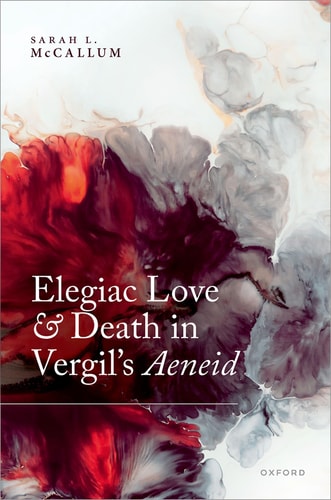
Elegiac Love and Death in Vergil's Aeneid
0
0
As an Amazon Associate and affiliate partner, Menrva Books earns from qualifying purchases. Learn more
Author Description
Elegiac Love and Death in Vergil's 'Aeneid' poses new questions about Vergil's pervasive engagement with elegy, both amatory and funerary, throughout his final epic endeavor. A foundational discussion of elegiac experimentation in the Eclogues, Georgics, and Aeneid 1-6 explores the aesthetic and conceptual development of destructive Vergilian amor (passion). The unique emphasis of subsequent chapters on the amatory and funerary elegiac dimensions of crucial episodes in Aeneid 7-12 illuminates the intergeneric character of Vergil's martial maius opus. A detailed examination of the inter- and intratextual strands of pivotal moments in the Aeneid evinces Vergil's intense engagement with literary predecessors and contemporaries, his evolving artistic vision, and his enduring influence on subsequent Roman poets. Each chapter of this volume enhances our understanding of the generic complexity of the Aeneid, presenting revisionary readings of key episodes and transformative interpretations of its main characters.
Menrva's Summary
THE THESIS
How does Vergil integrate the aesthetic and conceptual frameworks of elegy—both amatory and funerary—into the structure of his epic, the Aeneid? Prof. Sarah L. McCallum utilizes her expertise in classical philology to argue that Vergil’s engagement with elegiac traditions is not merely incidental but central to the poem's generic complexity and thematic depth. By tracing the evolution of 'amor' from the Eclogues through the final books of the Aeneid, the author demonstrates how Vergil subverts and incorporates the conventions of Roman elegy to redefine the nature of epic heroism and loss.
THE SCOPE MAP
What You Will Find
- A diachronic analysis of elegiac experimentation across Vergil’s corpus.
- A comparative study of amatory passion and funerary motifs in Aeneid 7-12.
- Close readings of intertextual and intratextual connections between Vergil and his contemporaries.
Scope Limits
- The text focuses primarily on the intersection of elegy and epic, rather than providing a comprehensive historical biography of Vergil.
- The analysis is restricted to the specific generic interplay between Roman elegy and the Aeneid, excluding broader sociopolitical contexts of the Augustan age.
THE AUTHORITY PERSPECTIVE
Scholars in the field of classical studies recognize this volume as a significant contribution to the study of intergeneric dynamics in Latin poetry. Readers frequently note the academic density of the prose, which is intended for advanced students and researchers of Vergilian studies.
Page Count:
240
Publication Date:
2024-01-01
Publisher:
Oxford University Press
ISBN-10:
0192863002
ISBN-13:
9780192863003
Poetry
History - Ancient
Academic
Literary Criticism
Community Tags
Similar Books