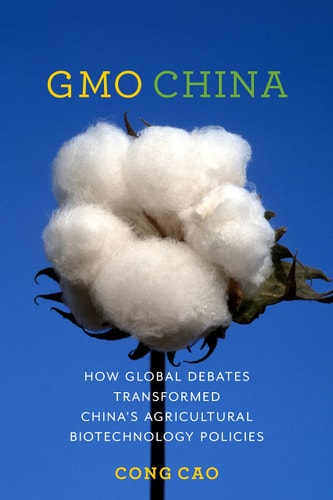
GMO China: How Global Debates Transformed China's Agricultural Biotechnology Policies
0
0
As an Amazon Associate and affiliate partner, Menrva Books earns from qualifying purchases. Learn more
Author Description
In China, as elsewhere, the debate over genetically modified organisms has become polarized into anti- and pro-GMO camps. Given the size of China's population and market, much is at stake in conflicts over regulation for domestic as well as international actors. In this book, Cong Cao provides an even-handed analysis that illuminates the tensions that have shaped China's policy toward agricultural biotechnology in a global perspective. Cao presents a comprehensive and systematic analysis of how China's policy toward research and commercialization of genetically modified crops has shifted that explains how China's changing GMO stances reflect its evolving position on the world stage. While China's scientific community has set the agenda, it has encountered resistance rooted in concerns over food safety and consumers' rights as well as issues of intellectual property rights and food sovereignty. Although Chinese leaders at first sought to take advantage of the biotech revolution by promoting GMO crop consumption, Cao demonstrates that policy has since become precautionary, as seen in new laws and regulations grounded in concerns over safety and the deferral of commercialization of GM rice. He presents China's policies in light of changing global attitudes toward GM crops: As shifts in China have closely followed global trends, so has domestic activism. Drawing on government and scientific documents as well as interviews with scientists, officials, policy analysts, activists, and journalists, GMO China is an important book for China studies, science and technology studies, policy analysts, and professionals interested in the Chinese biotechnology market.
Menrva's Summary
THE THESIS
This book investigates how global debates surrounding genetically modified organisms (GMOs) have influenced and transformed China's agricultural biotechnology policies. Cong Cao analyzes the polarized anti- and pro-GMO camps within China, highlighting the significant stakes for both domestic and international actors due to China's large population and market. The book systematically examines the shifts in China's policy toward the research and commercialization of genetically modified crops, demonstrating how these changes reflect China's evolving global position. While the scientific community has largely driven the agenda, it has faced resistance stemming from concerns over food safety, consumer rights, intellectual property, and food sovereignty.
THE SCOPE MAP
- Analysis of the polarized anti
- and pro-GMO camps in China.
- Examination of how China's policy toward agricultural biotechnology has shifted over time.
- Exploration of the influence of global attitudes and domestic activism on China's GMO stances.
- Discussion of the role of the scientific community, consumer rights, intellectual property, and food sovereignty.
- Case study of the precautionary policy shift, including new laws and regulations regarding GM rice.
- Insights drawn from government and scientific documents, as well as interviews with scientists, officials, policy analysts, activists, and journalists.
THE AUTHORITY PERSPECTIVE
The book is presented as an even-handed analysis that illuminates the tensions shaping China's policy toward agricultural biotechnology within a global context. It is positioned as an important resource for those studying China, science and technology, policy analysis, and the Chinese biotechnology market. The author's approach is described as comprehensive and systematic, drawing on a range of primary sources including interviews with key stakeholders. The work aims to explain how China's changing GMO stances mirror its evolving position on the world stage.
Page Count:
288
Publication Date:
2018-01-01
Publisher:
Columbia University Press
ISBN-10:
0231171668
ISBN-13:
9780231171663
Politics
History
Science
Non-Fiction
Science & Technology
Community Tags
Similar Books