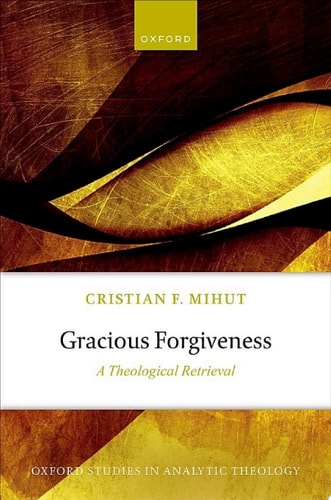
Gracious Forgiveness: A Theological Retrieval
Author Description
Divine forgiveness is expressed in biblical and liturgical contexts through a variety of metaphors-canceling debts, covering stains, forgoing or stopping litigation, forgetting iniquities, and more. In this study, Cristian F. Mihut retrieves a theologically paradigmatic, liturgically deep, and symbolically evocative image of divine forgiveness that has received little attention: bearing burdens. Gracious Forgiveness: A Theological Retrieval articulates a divine disposition to forgive starting from this metaphor. Embedded in a larger covenantal-relational framework where sin is a cosmic sickness, humans are targets of divine healing, and divine transcendence is expressed through inexhaustible gracious commitments to redress brokenness, divine forgivingness finds its most lucid, tangible, and full expression in the life and work of Jesus Christ. In the person of Jesus Christ, we see most clearly how a gracious God is committed to separating sinners from their sin, and how God heals people by absorbing into God's own being the consequences of their offense. A second main argument of the book is that sin-bearing Christological forgivingness has ethical and relational ramifications. The study articulates a human disposition to forgive-forgivingness-that involves both a certain conception of one's participation in Christ and a certain formation of one's sensibility. Entrenching forgivingness depends at once on developing gracious, hopeful, and merciful dispositions, but also on seeing oneself as a continuant of God's cosmic story of redressing brokenness. Mihut concludes with a defense of the surprising claim that curative forgivingness is compatible with anger, and even recommended to people living under oppression.
Menrva's Summary
THE THESIS
This study investigates the theological and ethical implications of divine forgiveness by retrieving the neglected metaphor of 'bearing burdens' as a central framework for understanding God's redemptive work. Cristian F. Mihut, a scholar in analytic theology, constructs a systematic argument that positions divine forgiveness as a curative, covenantal act. By examining the life and work of Jesus Christ, the author posits that God heals humanity by absorbing the consequences of sin, thereby establishing a model for human relational ethics and the practice of forgiveness.
THE SCOPE MAP
What You Will Find
- A theological analysis of biblical and liturgical metaphors for forgiveness.
- A Christological framework centered on the concept of sin-bearing.
- An ethical exploration of how human dispositions toward mercy and hope are formed through participation in the divine story.
- A defense of the compatibility between curative forgiveness and the presence of anger, particularly in contexts of oppression.
Scope Limits
- The study does not provide a comprehensive historical survey of all forgiveness theories throughout church history.
- It focuses primarily on the analytic theological tradition rather than purely historical or sociological perspectives.
THE AUTHORITY PERSPECTIVE
Experts in analytic theology recognize this work as a significant contribution to the field for its rigorous engagement with both classical metaphors and contemporary ethical concerns. Readers frequently note the academic density of the prose, which requires a foundational understanding of theological discourse to fully grasp the author's nuanced arguments.
Page Count:
208
Publication Date:
2023-01-01
Publisher:
OUP Oxford
ISBN-10:
0192873857
ISBN-13:
9780192873859
Religion
Theology
Christian Theology
Analytic Theology
Theology Practical
Ethics
Christology
Community Tags
Similar Books