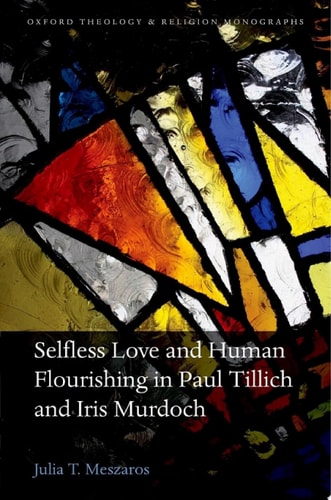
Selfless Love and Human Flourishing in Paul Tillich and Iris Murdoch
0
0
As an Amazon Associate and affiliate partner, Menrva Books earns from qualifying purchases. Learn more
Author Description
In an age of self-affirmation and self-assertion, 'selfless love' can appear as a threat to the lover's personal well-being. This perception jars with the Biblical promise that we gain our life through losing it and therefore calls for a theological response. In conversation with the Protestant theologian Paul Tillich and the atheistic moral philosopher and novelist Iris Murdoch, Selfless Love and Human Flourishing in Paul Tillich and Iris Murdoch enquires into the anthropological grounds on which selfless love can be said to build up, rather than undermine, the lover's self. It proposes that while the implausibility of selfless love was furthered by the modern deconstruction of the self, both Tillich and Murdoch utilize this very deconstruction towards explicating and restoring the link between selfless love and human flourishing. Julia T. Meszaros shows that they use the modern diagnosis of the human being's lack of a stable and independent self as manifest in Sartre's existentialism in support of an understanding of the self as relational and fallen. This leads them to view a loving orientation away from self and a surrender to the other as critical to the full flourishing of human selfhood. In arguing that Tillich and Murdoch defend the link between selfless love and human flourishing through reference to the human being's ontological selflessness, Meszaros closely engages Søren Kierkegaard's earlier attempt to keep selfless love and human flourishing in a productive, dialectical tension. She also examines the breakdown of this tension in the later figures of Anders Nygren, Simone Weil, and Jean-Paul Sartre, and addresses the pitfalls of this breakdown. Her examination concludes by arguing that the link between selfless love and human flourishing would be strengthened by a more resolute endorsement of a personal God, and of the reciprocal nature of selfless love.
Menrva's Summary
THE THESIS
This work investigates whether the concept of selfless love serves to undermine or enhance human flourishing by analyzing the intersection of theology and moral philosophy. Julia T. Meszaros, a scholar in theology and religion, examines the anthropological foundations of the self through the perspectives of Paul Tillich and Iris Murdoch. By engaging with their critiques of the modern, unstable self, she argues that a relational understanding of human existence necessitates a surrender to the other as a prerequisite for true self-actualization.
THE SCOPE MAP
What You Will Find
- Comparative analysis of Paul Tillich's theological framework and Iris Murdoch's moral philosophy.
- Examination of the influence of Jean-Paul Sartre's existentialism on modern conceptions of the self.
- Critical review of the dialectical tension between love and flourishing in the work of Søren Kierkegaard.
- Assessment of the limitations found in the theories of Anders Nygren, Simone Weil, and Jean-Paul Sartre.
Scope Limits
- The study does not provide a comprehensive history of all theological views on love.
- It focuses specifically on the tension between self-assertion and self-surrender rather than broader sociological applications of love.
THE AUTHORITY PERSPECTIVE
Scholars and theologians identify this text as a rigorous contribution to the dialogue between existentialist philosophy and Christian ethics. Readers frequently note the academic density of the prose, which requires a foundational understanding of the primary thinkers discussed.
Page Count:
248
Publication Date:
2016-01-01
Publisher:
OUP Oxford
ISBN-10:
0191078360
ISBN-13:
9780191078361
Religion
Philosophy
Theology
Altruism
Moral Philosophy
Ethics
Christian Theology
Existentialism
Community Tags
Other Editions(2)
Similar Books





Reader Comments
Share Your Thoughts
No comments yet. Be the first to share your thoughts!