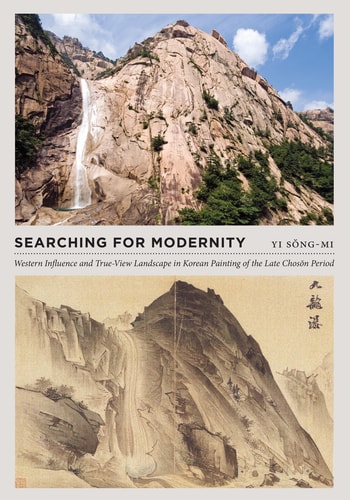
Searching for Modernity: Western Influence and True-view Landscape in Korean Painting of the Late Chosŏn Period
0
0
As an Amazon Associate and affiliate partner, Menrva Books earns from qualifying purchases. Learn more
Author Description
Korean painters participated in two major cultural trends of the late Choson period in the eighteenth and nineteenth centuries: inquiry into things Korean and investigation of things Western. Departing from Chinese sources long considered authoritative, they developed the distinctly Korean mode known as?true-view? landscape painting for depicting the scenery of their own country. Rooted in the documentary painting of the early Choson period and displaying special techniques developed to describe distinctive features of Korea?s topography, true-view paintings portray the most exemplary and ideal landscapes of Korea, such as those of Mount Kumgang (Diamond Mountain). The same painters also drew on Western painting methods, which they learned from descriptions of Western paintings seen and recorded by Korean emissaries to Beijing as well as from actual paintings brought back. This knowledge inspired them to produce not only landscapes but also portraits, images of animals and other paintings based on firsthand observation of nature. Both trends, looking inward to Korea and outward to the West, represented Korean aspiration for something new? for?modernity.? Deftly weaving these two strands together as the unifying theme of Searching for Modernity, Yi Song-mi expands on her pioneering work on true-view landscape painting to reveal even more of the depth and complexity of this mature and fully Korean form of artistic expression.
Menrva's Summary
THE THESIS
This book investigates the dual currents of Western influence and a uniquely Korean artistic identity that shaped late Chosŏn dynasty painting. The author explores how Korean artists in the 18th and 19th centuries moved away from traditional Chinese models to develop
THE SCOPE MAP
- The development of "true-view" landscape painting as a distinctly Korean art form.
- The influence of Western painting techniques learned through emissaries and direct observation.
- The portrayal of exemplary Korean landscapes, including Mount Kumgang.
- The application of Western methods to genres beyond landscape, such as portraits and animal studies.
- An analysis of how these artistic trends reflected a Korean aspiration for modernity.
- The author's pioneering work on true-view landscape painting, expanded to reveal greater depth and complexity.
THE AUTHORITY PERSPECTIVE
The book is regarded as a significant contribution to the study of Korean art history, particularly concerning the late Chosŏn period. It is noted for its detailed examination of how Korean artists integrated Western artistic concepts while simultaneously forging a unique national artistic identity. The work is praised for expanding upon previous scholarship on true-view landscape painting, offering a more nuanced understanding of this mature artistic expression. The synthesis of internal Korean artistic developments with external Western influences is presented as a key theme, highlighting the period's drive towards modernity.
Page Count:
222
Publication Date:
2015-01-01
Publisher:
University of Washington Press
ISBN-10:
0295993936
ISBN-13:
9780295993935
History
Art
Non-Fiction
Modernity
Landscape Painting
Art History
Asian Art
Community Tags
Similar Books














