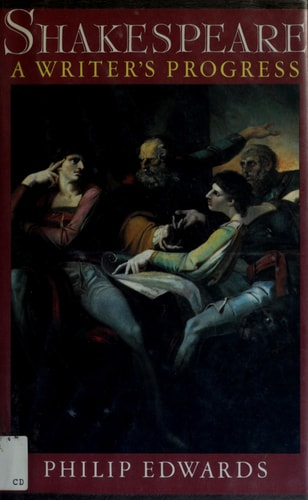
Shakespeare: A Writer's Progress
0
0
As an Amazon Associate and affiliate partner, Menrva Books earns from qualifying purchases. Learn more
Author Description
Operating on the premise that Shakespeare's writings are a unified exploration of the human experience, Philip Edward's new work stresses the continuity of all the works--plays and poems, early and late writings, comedies and tragedies. The achievement of the plays is examined in chapters which maintain the traditional categories of comedy, history, and tragedy, but Edwards makes an important contribution to the field with his analysis of "tragicomedy"--a genre which unites the middle "problem" comedies with the final engimatic "romances".
Menrva's Summary
THE THESIS
This work investigates the premise that William Shakespeare’s entire body of work constitutes a unified, continuous exploration of the human experience. Philip Edwards, a noted scholar of Elizabethan literature, utilizes a chronological and thematic framework to argue that the distinctions between Shakespeare’s early and late writings are less significant than their shared underlying concerns. By examining the progression of the plays and poems, Edwards seeks to demonstrate a coherent development in the playwright’s artistic vision.
THE SCOPE MAP
What You Will Find
- Analysis of the continuity between early comedies and late romances
- Examination of the "tragicomedy" genre as a bridge between disparate play types
- Thematic synthesis of the traditional categories of comedy, history, and tragedy
Scope Limits
- The text does not provide a comprehensive biography of Shakespeare’s personal life
- It does not focus on performance history or theatrical production techniques
THE AUTHORITY PERSPECTIVE
Scholars frequently cite this work for its clear, structured approach to Shakespeare’s canon and its focus on the evolution of his dramatic style. It is often regarded as a helpful resource for students and readers seeking to understand the thematic connections across the playwright's diverse body of work.
Page Count:
224
Publication Date:
1987-05-21
Publisher:
Oxford University Press
ISBN-10:
0192891669
ISBN-13:
9780192891662
Biography
Non-Fiction
Literary Criticism