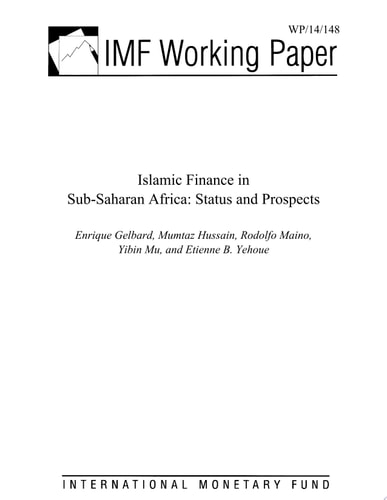
Islamic Finance in Sub-Saharan Africa: Status and Prospects
0
0
As an Amazon Associate and affiliate partner, Menrva Books earns from qualifying purchases. Learn more
Author Description
Islamic finance is a fast growing activity in world markets. This paper provides a survey on Islamic Finance in SSA. Ongoing activities include Islamic banking, sukuk issuances (to finance infrastructure projects), Takaful (insurance), and microfinance. While not yet significant in most Sub-Saharan countries, several features make Islamic finance instruments relevant to the region, in particular the ability to foster SMEs and micro-credit activtities. As a first step, policy makers could introduce Islamic financing windows within the conventional system and facilitate sukuk issuance to tap foreign investors. The entrance of full-fleged Islamic banks require addressing systemic issues, and adapting the crisis management and resolution frameworks. The IMF can play a role by sharing international experiences and providing advice on supervisory and regulatory frameworks as needed.
Menrva's Summary
THE THESIS
This paper surveys the current state and future potential of Islamic finance within Sub-Saharan Africa. The authors examine ongoing activities in Islamic banking, sukuk issuances for infrastructure, Takaful (insurance), and microfinance. While currently not a dominant force in most SSA countries, Islamic finance instruments offer unique advantages, particularly in fostering small and medium-sized enterprises and micro-credit initiatives. The paper suggests policy makers could begin by integrating Islamic financing windows into existing conventional systems and simplifying sukuk issuance to attract foreign investment.
THE SCOPE MAP
- Overview of Islamic finance activities in Sub-Saharan Africa (SSA).
- Analysis of Islamic banking, sukuk, Takaful, and microfinance operations in the region.
- Assessment of the relevance and potential of Islamic finance instruments for SSA economies.
- Discussion on fostering SMEs and micro-credit through Islamic finance.
- Policy recommendations for integrating Islamic finance, including financing windows and sukuk issuance.
- Considerations for establishing full-fledged Islamic banks, including regulatory and crisis management frameworks.
- The role of the IMF in sharing international experiences and providing advisory support.
THE AUTHORITY PERSPECTIVE
The paper offers a comprehensive overview of Islamic finance in Sub-Saharan Africa, highlighting its current status and future prospects. It details various instruments like sukuk and Takaful, emphasizing their potential to support SMEs and micro-credit. The authors provide actionable policy recommendations for integrating these financial mechanisms and address the systemic issues that arise with the introduction of full-fledged Islamic banks. The analysis suggests a strategic approach for policymakers and international financial institutions like the IMF to foster growth in this sector.
Page Count:
27
Publication Date:
2014-08-11
Publisher:
International Monetary Fund
ISBN-10:
1498348661
ISBN-13:
9781498348669
Non-Fiction
Economics
Islamic Finance
Banking
Microfinance
Africa
Finance
Community Tags
Similar Books