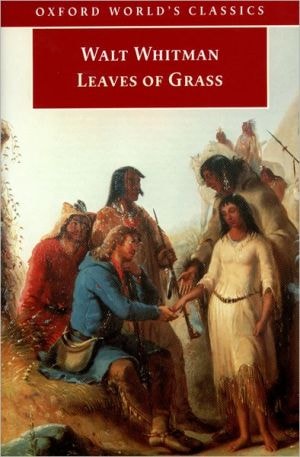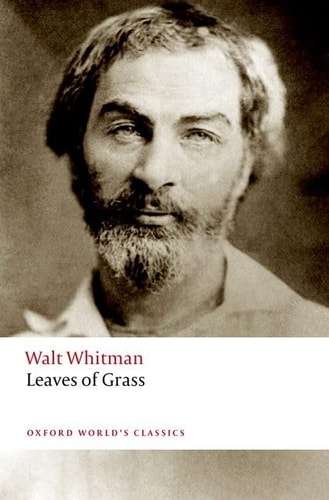
Leaves of Grass
0
0
As an Amazon Associate and affiliate partner, Menrva Books earns from qualifying purchases. Learn more
Author Description
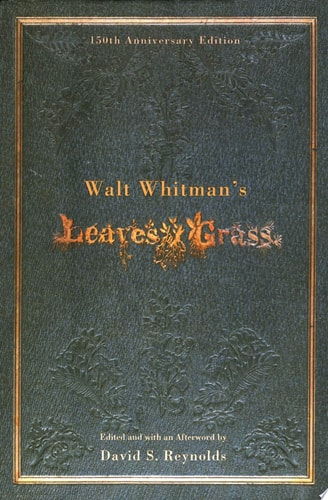
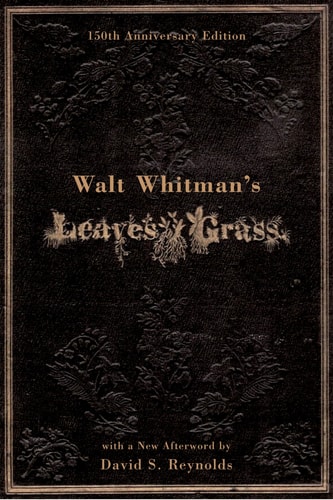
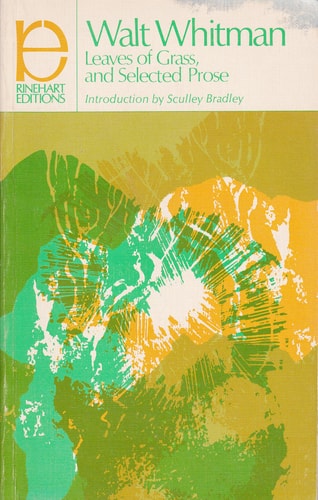
'I spring from the pages into your arms'Walt Whitman's Leaves of Grass stands as one of the most influential and innovative literary works of the last two hundred years. Widely credited as the originator of free verse in English, Whitman abandoned the rules of traditional poetry--breaking the standard metred line, discarding the obligatory rhyming scheme, and using the emerging American vernacular with the formal precedents of the past while adopting the vernacular rhythms of his emergent American democracy. Most currently available texts reproduce the poetry from the "Deathbed" edition of Leaves, first published in 1892. Often obscured by the near-ubiquitous reprinting of this final edition, however, is the elaborate fluidity and daring of the various previous editions of Leaves. After the book's initial publication in June 1855, Whitman revised and expanded the project a further seven times, with subsequent editions appearing in 1856, 1860, 1867, 1870-71, 1876, 1881-82, and at intervals until 1891-92. His revisions to particular poems were often substantial, and the addition of new poems to each successive edition so extensive, that the book's dimensions altered dramatically.This edition introduces Whitman's ongoing labour of revision and renewal--his successive responses to the shattering years that encompassed the American Civil War and its aftermath. Beginning with the first edition of 1855, it moves chronologically, selecting and including the most substantial poems and "clusters" as Whitman first included them. In most cases, the present edition reprints the often more politically and sexually daring beginning, rather than the revised "end" of a particular poem's journey. It thereby provides a portrait of a poet who feverishly attempted to reshape his project in tandem with some of the most tumultuous decades in American history, and who in the process radically revised the parameters and possibilities of poetry itself.ABOUT THE SERIES: For over 100 years Oxf
Menrva's Summary
THE PULSE
Walt Whitman’s collection serves as a radical departure from traditional poetic structures, initiating a new era of American free verse. The speaker adopts an expansive, democratic persona, aiming to unify the individual experience with the collective identity of a burgeoning nation. Through a series of evolving editions, the work navigates the physical and social landscape of the United States, often confronting the tensions of the Civil War and the shifting moral codes of the era. The narrative framework is primarily first-person, utilizing a sprawling, catalog-like style that rejects conventional meter in favor of rhythmic, vernacular prose.
INSIDE THE PAGES
- Utilization of free verse as a primary structural device
- Incorporation of American vernacular and colloquial speech patterns
- Frequent use of expansive, rhythmic catalogs to list people and places
- Exploration of the connection between the individual body and the national spirit
- Inclusion of themes regarding nature, mortality, and democratic equality
- Direct address to the reader to establish an intimate, personal connection
- Chronological presentation of poems as they appeared in early editions
- Focus on the fluid, revisionist nature of the poet's creative process
THE COLLECTIVE ECHO
Readers and critics frequently highlight the work's role in establishing the foundation of modern American poetry. Discussion often centers on the tension between the poet's optimistic democratic vision and the harsh realities of the mid-19th century. Many observers note the effectiveness of Whitman's atmospheric, sensory-rich language in creating a sense of national scale. The text is widely studied for its departure from European metrical traditions and its embrace of a uniquely American voice. Scholars often emphasize that the work remains a central point of reference for understanding the evolution of poetic form and identity.
Page Count:
576
Publication Date:
2024-12-12
Publisher:
Oxford University Press
ISBN-10:
0192894447
ISBN-13:
9780192894441
Classics
Poetry
American
Free Verse
19th Century