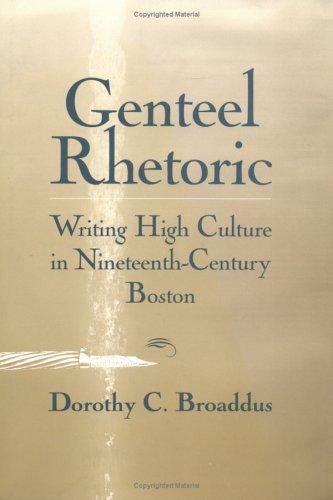
Genteel Rhetoric
0
0
As an Amazon Associate and affiliate partner, Menrva Books earns from qualifying purchases. Learn more
Author Description
Situated in mid-nineteenth-century Boston culture, Genteel Rhetoric combines history and cultural studies to examine the shaping of nineteenth-century North American rhetoric and aesthetics. The practitioners of genteel rhetoric included many of the writers who belonged to the New England school: Ralph Waldo Emerson, James Russell Lowell, Oliver Wendell Holmes, Charles Eliot Norton, and Thomas Wentworth Higginson. Harvard graduates and students of Edward T. Channing, Boylston Professor of Rhetoric and Oratory from 1819 to 1851, these men were also influenced by the Unitarian rhetoric of Channing's brother, William Ellery Channing, as well as by orators such as Edward Everett. They were part of a larger North American refinement movement - a movement interrupted by the Civil War. Broaddus argues that the genteel and coherent voices with which these writers discuss literature and high culture break apart when they begin to write about material issues related to slavery, abolition, and war against the background of growing dissent between North and South. Genteel Rhetoric examines the writers as they live through and write about the Civil War - Emerson and Lowell from a safe distance, Holmes searching for his wounded son in Maryland, and Higginson in the thick of action as colonel of the First South Carolina Volunteers, the first regiment of former slaves in the Union army.
Menrva's Summary
THE THESIS
This book investigates how the refined rhetorical and aesthetic standards of mid-nineteenth-century Boston fractured under the pressures of slavery, abolition, and the Civil War. Dorothy C. Broaddus, drawing on historical and cultural studies, examines the New England school of writers including Emerson, Lowell, Holmes, Norton, and Higginson, who were educated under Edward T. Channing and influenced by Unitarian rhetoric. The book details how their coherent discourse on literature and high culture began to break down when confronting the divisive material issues of their era. Broaddus analyzes how these writers experienced and wrote about the Civil War, from those observing from afar to those directly involved in the conflict.
THE SCOPE MAP
- Analysis of genteel rhetoric and aesthetics in mid-nineteenth-century North America, particularly Boston.
- Examination of key figures from the New England school: Emerson, Lowell, Holmes, Norton, and Higginson.
- Exploration of the influence of Edward T. Channing and Unitarian rhetoric.
- Discussion of the North American refinement movement and its interruption by the Civil War.
- Argument on the disintegration of genteel voices when addressing slavery, abolition, and war.
- Case studies of writers' experiences and writings during the Civil War, including direct participation.
THE AUTHORITY PERSPECTIVE
The book is recognized for its detailed examination of the intellectual and cultural landscape of mid-nineteenth-century Boston, focusing on the evolution of rhetorical practices. It is noted for its scholarly approach, combining historical context with cultural analysis to understand how societal upheaval impacted literary expression. The work is appreciated for its in-depth look at prominent writers of the era and their responses to the moral and political crises of their time. The analysis of how genteel discourse faltered when confronted with the realities of slavery and war provides a critical perspective on the period's literary output.
Page Count:
136
Publication Date:
1999-01-01
ISBN-10:
1570032440
ISBN-13:
9781570032448
Non-Fiction
History
American
Aesthetics
Rhetoric
19th Century
Community Tags
Similar Books