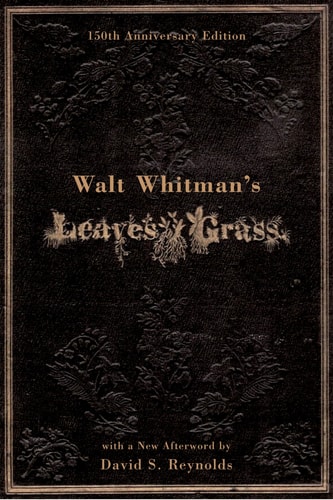
Leaves of Grass
0
0
As an Amazon Associate and affiliate partner, Menrva Books earns from qualifying purchases. Learn more
Author Description
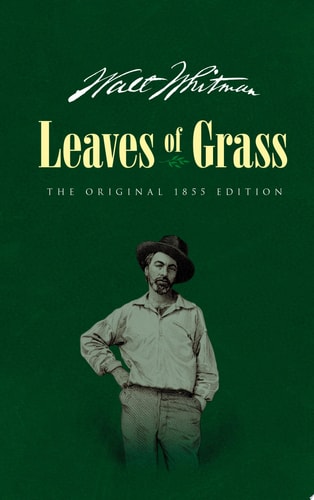
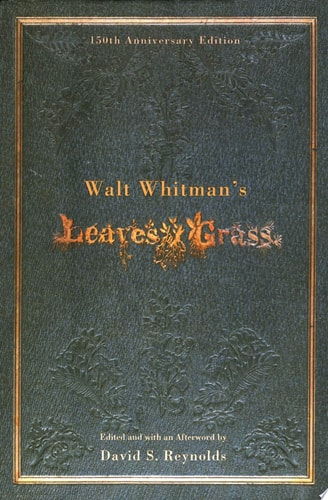
As featured in AMC's Breaking Bad, given by Gale Boetticher to Walter White and discovered by Hank Schrader."I celebrate myself,And what I assume you shall assume,For every atom belonging to me as good belongs to you.I loafe and invite my soul,I lean and loafe at my ease....observing a spear of summer grass."So begins Leaves of Grass, the first great American poem and indeed, to this day, the greatest and most essentially American poem in all our national literature.The publication of Leaves of Grass in July 1855 was a landmark event in literary history. Ralph Waldo Emerson judged the book "the most extraordinary piece of wit and wisdom America has yet contributed." Nothing like the volume had ever appeared before. Everything about it--the unusual jacket and title page, the exuberant preface, the twelve free-flowing, untitled poems embracing every realm of experience--was new. The 1855 edition broke new ground in its relaxed style, which prefigured free verse; in its sexual candor; in its images of racial bonding and democratic togetherness; and in the intensity of its affirmation of the sanctity of the physical world.This Anniversary Edition captures the typeface, design and layout of the original edition supervised by Whitman himself. Today's readers get a sense of the "ur-text" of Leaves of Grass, the first version of this historic volume, before Whitman made many revisions of both format and style. The volume also boasts an afterword by Whitman authority David Reynolds, in which he discusses the 1855 edition in its social and cultural contexts: its background, its reception, and its contributions to literary history. There is also an appendix containing the early responses to the volume, including Emerson's letter, Whitman's three self-reviews, and the twenty other known reviews published in various newspapers and magazines.This special volume will be a must-have keepsake for fans of Whitman and lovers of American poetry.
Menrva's Summary
THE PULSE
The central conflict arises from the poet's radical attempt to reconcile the individual self with the vast, democratic expanse of the American landscape. Whitman positions himself as an observer and participant in the physical world, seeking to dissolve the boundaries between the speaker and the reader. Through a series of untitled, free-flowing verses, he challenges the rigid poetic conventions of the mid-19th century. The narrative framework is primarily first-person, utilizing an expansive, conversational tone that prioritizes the sanctity of the human experience over traditional meter or rhyme.
INSIDE THE PAGES
- Utilization of free verse as a primary structural innovation
- Emphasis on the interconnectedness of all living things
- Explicit celebration of the physical body and human senses
- Themes of democratic equality and national identity
- Incorporation of colloquial language and vernacular speech
- Rejection of traditional poetic structures and formal constraints
- Focus on the observation of nature as a spiritual practice
- Inclusion of an exuberant, manifesto-like preface
THE COLLECTIVE ECHO
Readers and critics frequently highlight the work's departure from Victorian-era poetic norms as its most significant contribution to literary history. Discussion often centers on the tension between Whitman's intense individualism and his desire to represent the collective American spirit. Scholars frequently analyze the text's sexual candor and its radical embrace of the physical world as foundational elements of modern American verse. The pacing is noted for its rhythmic, oratorical quality that invites the reader to engage with the text as a living, breathing entity. Many readers find that the 1855 edition provides a unique window into the author's original vision before subsequent revisions altered the collection's trajectory.
Page Count:
192
Publication Date:
2005-04-15
Publisher:
Oxford University Press
ISBN-10:
0195183428
ISBN-13:
9780195183429
Classics
Poetry
19th Century
American
Community Tags
Other Editions(59)

National Book Network
2024
Default edition
Ascent Audio
2023

Repro India Limited
2022
Independently Published
2021
Independently Published
2021

Tantor and Blackstone Publishing
2021

Independently Published
2020

Information Age Publishing, Incorporated
2020

Independently Published
2020

Independently Published
2020
Courier Dover Publications
2020

Independently Published
2020
Graphic Arts Books
2020
Mint Editions
2020

Independently Published
2020
Sde Classics
2019
Bibliotech Press
2019
Knopf Doubleday Publishing Group
2019

Random House Digital Inc.
2019
Arcturus Publishing
2019

Amazon Digital Services LLC - KDP Print US
2019

Amazon Digital Services LLC - KDP Print US
2018
Amazon Digital Services LLC - KDP Print US
2018

Amazon Digital Services LLC - KDP Print US
2018
Amazon Digital Services LLC - KDP Print US
2018
Amazon Digital Services LLC - KDP Print US
2018
Amazon Digital Services LLC - KDP Print US
2018

Canterbury Classics
2018
Quarto Publishing Group USA
2018

Independently Published
2017

Simon & Schuster
2017
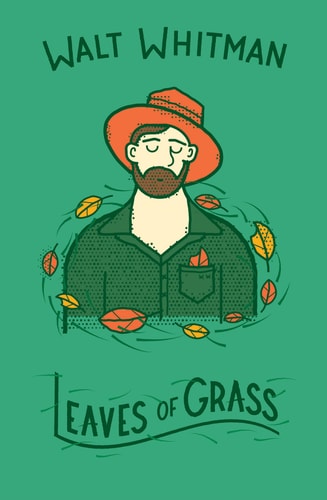
Gibbs Smith
2017
Dreamscape Media, LLC
2016
Joe Books Ltd
2015
First Avenue Editions ™
2015

First Avenue Editions
2015

Canterbury Classics
2015

Read Books Ltd.
2015

Xist Publishing
2015

Lerner Publishing Group
2015

HarperCollins Publishers
2015

CreateSpace Independent Publishing Platform
2014

HarperCollins
2014
National Geographic Books
2013
Murine Publications
2013

Bibliotech Press
2012
Oxford University Press
2009
Oxford University Press
2005
Oxford University Press
2005

Random House Digital Inc.
2004

Barnes & Noble World Digital Library
2003
Random House Digital Inc.
2000

HarperCollins
2000

Amereon Limited
1996

Barnes & Noble Incorporated
1993
Vintage Books/Library of America
1992
Oxford University Press
1990

Turtleback
1986

Penguin
1980
Similar Books
Reader Comments
Share Your Thoughts
No comments yet. Be the first to share your thoughts!