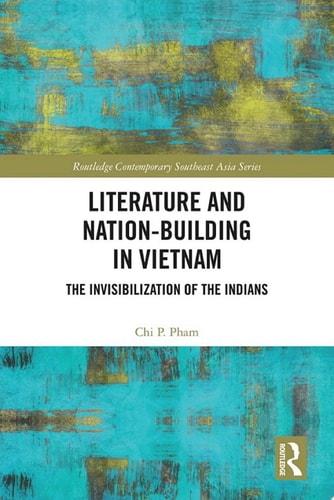
Literature and Nation-Building in Vietnam
0
0
As an Amazon Associate and affiliate partner, Menrva Books earns from qualifying purchases. Learn more
Author Description
This book analyzes why Indians have been made invisible in Vietnamese society and historiography. It argues that their invisibilization originates in the formulaic metaphor Vietnamese nation-makers have used to portray Indians in their quest for national sovereignty and socialism. The book presents a complex view on colonial legacies in Vietnam which suggests that Vietnamese nation-makers associate Indians with colonialism and capitalism, ultimately viewed as "non-socialist" and "non-hegemonic" state structures. Furthermore, the book demonstrates how Vietnamese nation-makers achieve the overriding socialist and independent goal of historically differing Indians from Vietnamese nationalisms whilst simultaneously making them invisible. In addition to primary Vietnamese texts which demonstrate the performativity of language and the Vietnamese traditional belief in writing as a sharp weapon for national and class struggles, the author utilizes interviews with Indians and Vietnamese authorities in charge of managing the Indian population. Bringing to the surface the ways through which Vietnamese intellectuals have invisibilized the Indians for the sake of the visibility of national hegemony and prosperity, this book will be of interest to scholars of Southeast Asian Studies and South Asian Studies, Vietnam Studies, including nation-building, literature, and language.
Menrva's Summary
THE THESIS
This book investigates the deliberate erasure of Indian presence within Vietnamese society and historical narratives. It argues that Vietnamese nation-builders, in their pursuit of national sovereignty and socialism, constructed a metaphorical framework that rendered Indians invisible by associating them with colonialism, capitalism, and non-socialist state structures. The work examines how this process simultaneously achieved socialist goals and asserted national hegemony, drawing on primary Vietnamese texts and interviews to reveal the performativity of language and the strategic use of writing in national and class struggles.
THE SCOPE MAP
- Analysis of the metaphorical construction of Indians by Vietnamese nation-makers.
- Examination of the association of Indians with colonialism and capitalism.
- Exploration of the concept of 'non-socialist' and 'non-hegemonic' state structures.
- Demonstration of how Indians were differentiated from Vietnamese nationalisms.
- Utilization of primary Vietnamese texts concerning language and national struggles.
- Inclusion of interviews with Indians and Vietnamese authorities managing the Indian population.
- Uncovering the methods by which Vietnamese intellectuals made Indians invisible for national visibility and prosperity.
THE AUTHORITY PERSPECTIVE
The book offers a nuanced perspective on colonial legacies in Vietnam, suggesting that the invisibility of Indians is a direct result of the metaphorical language employed by Vietnamese nation-makers. It highlights the complex interplay between the pursuit of national sovereignty, socialism, and the strategic differentiation of certain populations. The work is positioned to be of significant interest to scholars specializing in Southeast Asian Studies, South Asian Studies, and Vietnam Studies, particularly those focusing on nation-building, literature, and language.
Page Count:
160
Publication Date:
2021-06-17
Publisher:
Taylor & Francis
ISBN-10:
0429582129
ISBN-13:
9780429582127
Non-Fiction
History
Socialism
Literature
Capitalism
Nation-building
Language
Community Tags
Similar Books