Speculation
0
0
As an Amazon Associate and affiliate partner, Menrva Books earns from qualifying purchases. Learn more
Author Description
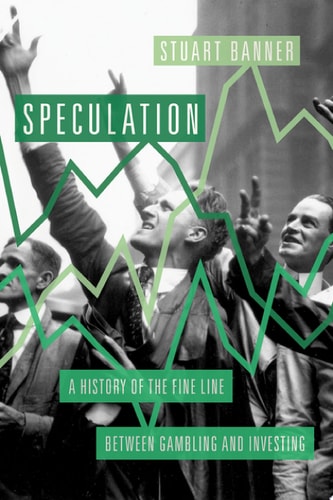
What Is The Difference Between Gambling And Speculation? This Difficult Question Has Posed A Legal Problem Throughout American History. Many Have Argued That Periodic Failures By Regulators To Differentiate Between The Two Have Been The Proximate Causes Of Catastrophic Economic Downturns, Including The Great Depression And The 2008 Global Financial Crisis. In Speculation, Stuart Banner Provides A Sweeping History Of How The Fine Lines Separating Investment, Speculation, And Outright Gambling Have Shaped America From The 1790s To The Present. Advocates For Risky Investments Have Long Argued That Risk-taking Is What Defines America. On The Other Side, Critics Counter That Unregulated Speculation Results In Bubbles That Draw In The Most Ill-informed Investors, Creating Financial Chaos. The Debate Has Been A Perennial Feature Of American History. The Panic Of 1837, The Speculative Boom Of The Roaring Twenties, And The Real Estate Bubble Of The Early 2000s Are All Emblematic Of The Difficulty In Differentiating Sober From Reckless Speculation. Some, Chastened By The Most Recent Crash, Argue That We Need To Prohibit Certain Risky Transactions, But Others Respond By Citing The Benefits Of Loosely Governed Markets And The Dangers Of Over-regulation. Economic Crises Have Generated Deep Ambivalence, Yet Americans' Faith In Investment And The Stock Market Has Always Rebounded Quickly After Even The Most Savage Downturns. Speculation Explores A Suite Of Themes That Sit At The Heart Of American History-the Ability Of Courts And Regulators To Protect Ordinary Americans From The Ravages Of Capitalism; The Periodic Fallibility Of The American Economy; And The Moral Conundrum Inherent In Profiting From Speculation While Condemning Speculators. Banner's Engaging And Accessible History Is Invaluable Not Only For Understanding The Fault Lines Beneath The American Economy Today, But American Identity Itself.
Menrva's Summary
THE THESIS
This book investigates the historical and legal difficulty of distinguishing between legitimate investment, speculation, and gambling within the American economic framework. Stuart Banner, a legal historian, examines how these blurred lines have influenced American policy and public perception from the 1790s to the present day. He argues that the inability to effectively regulate these activities has contributed to recurring financial crises, while simultaneously reflecting deeper tensions regarding American identity and the morality of risk-taking.
THE SCOPE MAP
What You Will Find
- A chronological analysis of American financial history from the 1790s through the 2008 global financial crisis.
- Examination of major economic events including the Panic of 1837 and the speculative boom of the 1920s.
- Legal and regulatory perspectives on the shifting definitions of market participation.
Scope Limits
- The text does not provide a technical manual for modern stock market trading or investment strategies.
- It does not offer specific policy prescriptions for future financial regulation.
THE AUTHORITY PERSPECTIVE
Experts and readers frequently note that the book provides a clear, accessible narrative that bridges the gap between legal history and economic theory. It is widely regarded as a useful resource for understanding the historical context behind contemporary debates on market regulation and the cyclical nature of American financial crises.
Page Count:
288
Publication Date:
2016-01-01
Publisher:
Oxford University Press
ISBN-10:
0190623055
ISBN-13:
9780190623050
History
Economics
Finance
Law
Capitalism
American History
Community Tags
Similar Books