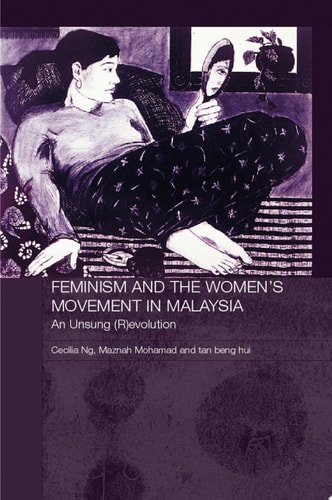
Feminism and the Women's Movement in Malaysia: An Unsung (R)evolution
0
0
As an Amazon Associate and affiliate partner, Menrva Books earns from qualifying purchases. Learn more
Author Description
Combining both personal and academic insights into the Malaysian women’s movement, this study provides an in-depth account of the multiple struggles of the Malaysian women’s movement, from securing gender equality in a patriarchal society to achieving unity among members of a multi-ethnic society that are further divided along class and religious lines. Most historical versions of national struggles have created icons out of male figures. The authors of this book have provided a corrective to this. They detail the importance of the role of the women’s movement, led by numerous unsung personalities in promoting social change in Malaysia. The book centres on a crucial argument: that in the context of an ethnically fragmented post-colonial, authoritarian society, an autonomous woman movement, which began in the early eighties had actually achieved significant political success. However the study observes that by the late 1990s, feminist issues were also readily appropriated by the state and the market, and also suggests that the emergence of ‘market feminism’ poses specific challenges for the future of the Malaysian women’s movement. This thorough and engaging account of feminism and the women’s movement in Malaysia will capture the interest of scholars, policy makers and activists.
Menrva's Summary
THE THESIS
This book investigates the historical trajectory and political impact of the women's movement in Malaysia. It examines the multifaceted struggles for gender equality within a patriarchal, multi-ethnic, and class-divided society, offering a corrective to historical narratives that often overlook female contributions. The authors argue that an autonomous women's movement, emerging in the early 1980s, achieved significant political success despite societal fragmentation, though by the late 1990s, feminist issues faced appropriation by the state and market, presenting new challenges.
THE SCOPE MAP
- Analysis of the early eighties' emergence of an autonomous women's movement in Malaysia.
- Exploration of the challenges in achieving unity among multi-ethnic, multi-class, and multi-religious women.
- Detailed account of securing gender equality in a patriarchal society.
- Examination of the political successes achieved by the women's movement.
- Discussion of the appropriation of feminist issues by the state and market in the late 1990s.
- Analysis of the emergence of 'market feminism' and its future implications.
- Integration of personal and academic insights into the Malaysian women's movement.
THE AUTHORITY PERSPECTIVE
This study is recognized for providing an in-depth account of the Malaysian women's movement, offering a crucial corrective to historical narratives that often sideline female figures. The authors' argument regarding the political successes of an autonomous women's movement within a fragmented post-colonial society is a central contribution. The book's analysis of the challenges posed by 'market feminism' and state/market appropriation of feminist issues is particularly noted. It is considered a valuable resource for scholars, policymakers, and activists interested in gender studies and social change in Malaysia.
Page Count:
240
Publication Date:
2006-04-18
Publisher:
Routledge
ISBN-10:
1134188838
ISBN-13:
9781134188833
History
Non-Fiction
Politics
Gender Studies
Sociology
Feminism
Community Tags
Similar Books