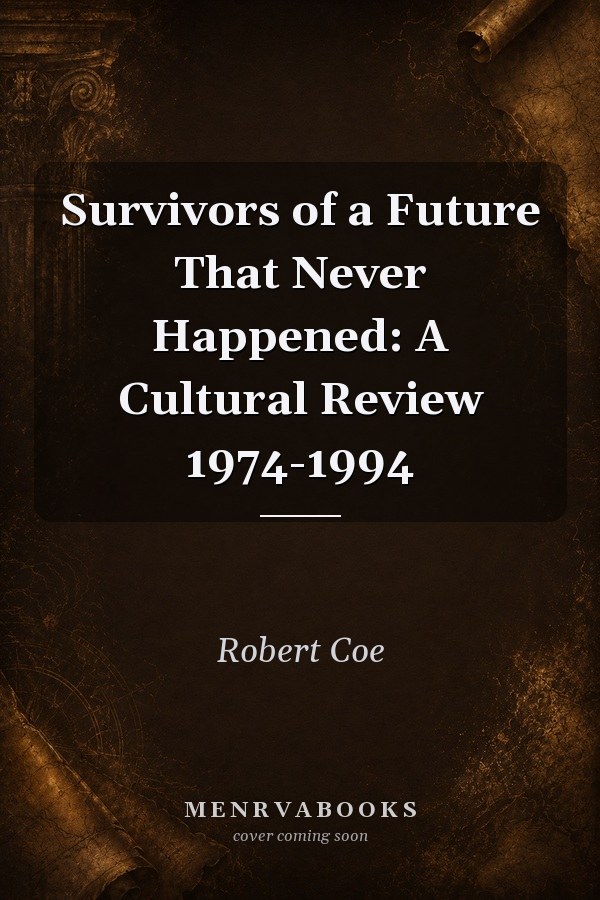
Survivors of a Future That Never Happened: A Cultural Review 1974-1994
0
0
As an Amazon Associate and affiliate partner, Menrva Books earns from qualifying purchases. Learn more
Author Description
These seventeen chapters of personal memoir, published journalism, art criticism, and cultural history provide a kind of social review of post-'60s America. Coe's journalism appeared in The New York Times Sunday Magazine and Arts & Leisure section, Rolling Stone, The Village Voice, Vanity Fair, Esquire, New York, California, American Theatre, and Tricycle: The Buddhist Review. The writing collected here is a fraction of what he published, plus seven stories that never saw the light of day. The journey from Big Sur journal-keeper to cultural historian might seem jarring, but so did Coe's life at the time. These seventeen chapters present different tones and textures, different ways of looking at things. The majority are profiles--life histories, artistic odysseys, and career sagas, reflecting my interests in the journeys people take, in the arts especially. Coe loved going in places and meeting people and figuring out what made a place tick. He wrote about people who thought they could re-invent the world, and he also felt an affinity for misfits, forgotten geniuses, and the ignored. Impermanence was a constant theme, as many of the things Coe wrote about would either dissolve or alter drastically as time went on. Another theme in SURVIVORS is the complex, constantly evolving relationship between tradition and innovation, in the performing arts especially. Taking these chapters together, they do provide a kind of cultural review, touching not only on the live and visual arts but also on art neighborhoods, a skydiving colony, poetry, ceramics, restaurants, Freudian psychology, women's body-building, Buddhism, cultural theory, and the politics of race. Coe writes about how things were changed, and how we were changed, and what changed us. Many of the chapters of SURVIVORS comment on what Coe's refers to at one point as "the madness and surreality of an American Age." He writes about artists and thinkers and dreamers who survived the cultural revolution of the '60s and
Menrva's Summary
THE THESIS
This collection examines the cultural landscape of post-'60s America through a diverse lens of personal memoir, journalism, and art criticism. Robert Coe, a writer whose work appeared in prominent publications like The New York Times and Rolling Stone, presents seventeen chapters that offer a unique social review of the period between 1974 and 1994. The essays explore the journeys of artists and thinkers, the complex interplay of tradition and innovation, and the evolving relationship between individuals and the societal shifts of the era. Coe's writing delves into themes of impermanence and the often surreal nature of American life during this transformative time.
THE SCOPE MAP
- Personal memoir and previously unpublished stories
- Journalism from The New York Times, Rolling Stone, Vanity Fair, Esquire, and others
- Art criticism and cultural history
- Profiles of artists, thinkers, and cultural figures
- Exploration of the post-'60s American cultural landscape
- Themes of impermanence, tradition vs. innovation, and societal change
- Discussions on live and visual arts, poetry, Buddhism, and cultural theory
- Commentary on the 'madness and surreality of an American Age'
THE AUTHORITY PERSPECTIVE
The collection offers a multifaceted look at a specific period in American cultural history, drawing on the author's extensive journalistic and critical background. The diverse range of topics, from artistic odysseys to cultural theory and personal reflections, suggests a rich and varied reading experience. The emphasis on individuals who sought to reinvent the world, alongside misfits and forgotten figures, points to a nuanced exploration of societal change and artistic endeavor. Coe's examination of the complex relationship between tradition and innovation, particularly in the performing arts, provides a framework for understanding the era's cultural evolution.
Page Count:
0
Publication Date:
2022-11-15
Publisher:
Firenze Books
ISBN-13:
9798986679808
History
Memoir
Biography
Non-Fiction
Journalism
Cultural History
Art Criticism
Community Tags
Similar Books