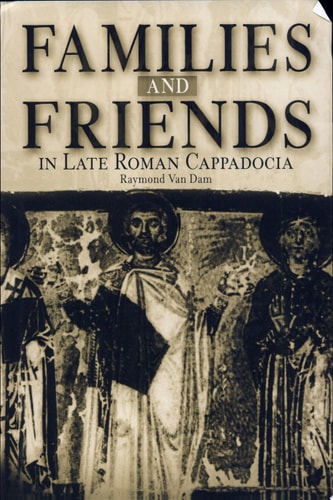
Families and Friends in Late Roman Cappadocia
0
0
As an Amazon Associate and affiliate partner, Menrva Books earns from qualifying purchases. Learn more
Author Description
Basil of Caesarea, his brother Gregory of Nyssa, and their friend Gregory of Nazianzus were prominent churchmen in Roman Cappadocia during the later fourth century. Because of their reputations as distinguished theologians, they are now known as the Cappadocian Fathers. Recent research on Roman families and friendships has been revitalized through the use of comparative demography, Roman law, and gender studies, and the extensive writings of the Cappadocian Fathers offer a rare opportunity for a close investigation of two provincial families side by side. By examining their relationships as sons, brothers, uncles, and mutual friends, Families and Friends in Late Roman Cappadocia combines patristic studies and ecclesiastical history with cultural studies and the history of the family. None of the Cappadocian Fathers became a parent. But as sons they had to cope with their different feelings about their fathers, one who died comparatively young, the other who lived much longer than expected. Since at the same time they were formulating their doctrines about God the Father and Jesus Christ the Son, Raymond Van Dam considers whether their personal experiences might have influenced their theology. The mothers in both families were influential figures, one because of her close emotional bond with her children, the other because she controlled the family's patrimony. Macrina, the famous sister of Basil and Gregory of Nyssa, was noted for her ascetic piety. Yet these women are known almost exclusively through texts composed by their sons or brothers. Narrating the lives of women was a rhetorical strategy for men to reflect on themselves and their own concerns. Friendships were a form of self-representation, too, and in choosing their friends Basil and Gregory of Nazianzus were at the same time fashioning personal identities. At one time, their own friendship had reflected their mutual delight in classical culture. After they became churchmen,
Menrva's Summary
THE THESIS
This book investigates the complex social dynamics of family and friendship within the context of late Roman Cappadocia, focusing on the lives of prominent churchmen and their relatives. Raymond Van Dam examines the relationships of Basil of Caesarea, Gregory of Nyssa, and Gregory of Nazianzus, exploring their roles as sons, brothers, uncles, and friends. The study utilizes comparative demography, Roman law, and gender studies, alongside the extensive writings of the Cappadocian Fathers, to provide a detailed look at two provincial families. It considers how personal experiences, such as coping with parental relationships and the influence of maternal figures, might have shaped their theological doctrines, particularly their formulations about God the Father and Jesus Christ the Son.
THE SCOPE MAP
- Analysis of the familial and friendship networks of Basil of Caesarea, Gregory of Nyssa, and Gregory of Nazianzus.
- Exploration of the roles of mothers and sisters within these prominent families.
- Examination of the influence of parental relationships on the theological development of the Cappadocian Fathers.
- Discussion of friendship as a form of self-representation and identity construction for churchmen.
- Integration of patristic studies, ecclesiastical history, cultural studies, and the history of the family.
- Focus on the specific socio-historical context of Roman Cappadocia in the later fourth century.
- Consideration of how women's lives were narrated by men for self-reflection.
THE AUTHORITY PERSPECTIVE
This work is recognized for its meticulous integration of historical, theological, and social studies approaches to understanding the lives of the Cappadocian Fathers. By focusing on the often-overlooked aspects of family and friendship, Van Dam offers a nuanced perspective on the personal influences that may have shaped their theological contributions. The book is valued for its detailed examination of familial relationships and the societal context of late Roman Cappadocia. It provides a rich resource for scholars interested in early Christian history, the history of the family, and the intersection of personal experience and religious doctrine.
Page Count:
256
Publication Date:
2003-03-18
Publisher:
University of Pennsylvania Press
ISBN-10:
0812237129
ISBN-13:
9780812237122
Biography
History
Non-Fiction
Social History
Family history
Community Tags
Similar Books