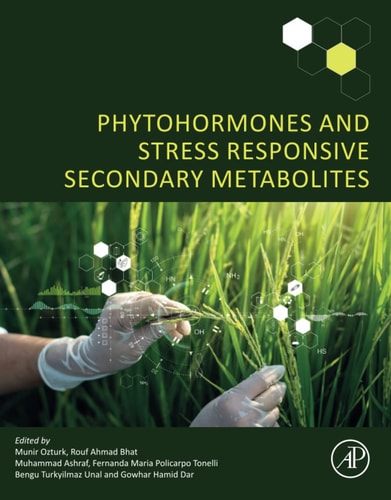
Phytohormones and Stress Responsive Secondary Metabolites
0
0
As an Amazon Associate and affiliate partner, Menrva Books earns from qualifying purchases. Learn more
Author Description
Phytohormones and Stress Responsive Secondary Metabolites provides a deep dive into the signaling pathways associated with phytohormones and phytometabolites. With a strong focus on plant stress responses and DNA technology, the book highlights plant biotechnology and metabolic engineering principles. Biotechnology, by using DNA editing technologies, allows the expression of plant genes into other plant species with desirable modulation on plant behavior. Beginning with an overview of phytohormone signaling, growth and abiotic and biotic stresses, subsequent chapters explore DNA modification strategies, epigenetic and epigenomic regulation, and miRNA regulation. This book will be an essential resource for students, researchers and agriculturalists interested in plant physiology, plant genetics and plant biotechnology. Provides a comprehensive review of phytohormone and phytometabolite signaling pathways Highlights recombinant DNA technology and therapeutic potential Analyzes plant stress responses under both abiotic and biotic stresses
Menrva's Summary
THE THESIS
This book investigates the intricate signaling pathways of phytohormones and phytometabolites, focusing on their role in plant stress responses and the application of DNA technology. It delves into plant biotechnology and metabolic engineering, explaining how DNA editing can transfer plant genes to modulate behavior in other species. The text begins with a broad overview of phytohormone signaling, growth, and stress responses, then progresses to detailed discussions on DNA modification, epigenetic regulation, and miRNA control, offering a comprehensive resource for those in plant physiology, genetics, and biotechnology.
THE SCOPE MAP
- Comprehensive review of phytohormone and phytometabolite signaling pathways.
- Detailed exploration of plant stress responses, encompassing both abiotic and biotic factors.
- In-depth analysis of DNA modification strategies and their application in plant biotechnology.
- Coverage of epigenetic and epigenomic regulation in plants.
- Explanation of miRNA regulation and its role in plant physiology.
- Discussion on recombinant DNA technology and its therapeutic potential in plants.
- Principles of metabolic engineering applied to plant science.
- Focus on plant gene expression and modulation of plant behavior through genetic transfer.
THE AUTHORITY PERSPECTIVE
This book is positioned as an essential resource for students, researchers, and agriculturalists engaged with plant physiology, genetics, and biotechnology. Its comprehensive review of signaling pathways and focus on cutting-edge DNA technologies like gene editing and epigenomic regulation suggest it aims to provide a thorough understanding of plant stress responses. The inclusion of topics such as metabolic engineering and therapeutic potential indicates a forward-looking perspective on the applications of plant science.
Page Count:
308
Publication Date:
2023-01-15
Publisher:
Elsevier Science
ISBN-10:
0323918832
ISBN-13:
9780323918831
Science
Non-Fiction
Biotechnology
Genomics
Plant biotechnology
Plant Genetics
Community Tags
Similar Books