Aphorismes (Les Presses d'Aujourd'hui)
0
0
As an Amazon Associate and affiliate partner, Menrva Books earns from qualifying purchases. Learn more
Author Description
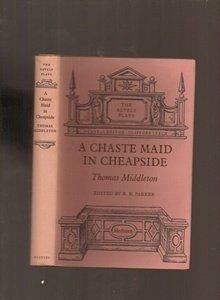
Written for the adult players at the open-air Swan theatre in 1613, this master-piece of Jacobean city comedy signals its ironic nature even in the title: chaste maids, like most other goods and people in London's busiest commercial area, are likely to be fake. Money is more important than either happiness or honour; and the most coveted commodities to be bought with it are sex and social prestige. Middleton interweaves the fortunes of four families, who either seek to marry their children off as profitably as possible, to stop having any more for fear of poverty, or to acquire some in order to keep their property in the family. Most prosperous is the husband who pimps his wife to a rich knight and lets him support the household with his alimony. Like many early modern critics of London's enormous growth, this play warned: the city is a monster that lives off the money the country produces.
Menrva's Summary
THE PULSE
The central conflict arises from the commodification of human relationships within the volatile, profit-driven environment of 17th-century London. Thomas Middleton presents a narrative where characters navigate the social and economic pressures of the city, prioritizing financial gain over personal integrity. The play utilizes a multi-plot structure to examine the interconnected lives of four families, each struggling with the demands of marriage, inheritance, and survival. Through this framework, the author critiques the moral decay inherent in a society where status and sex are treated as tradable assets.
INSIDE THE PAGES
- Multi-plot narrative structure
- Satirical depiction of London commercialism
- Exploration of marriage as a financial transaction
- Critique of social mobility and prestige
- Use of irony to expose character hypocrisy
- Focus on the tension between urban growth and rural production
- Jacobean linguistic style
- Thematic emphasis on the corruption of domestic values
THE COLLECTIVE ECHO
Discussion often centers on Middleton's cynical portrayal of the urban landscape and his ability to weave disparate family narratives into a cohesive critique of greed. Readers frequently highlight the sharp, biting humor that permeates the dialogue, noting how it effectively underscores the play's darker thematic elements. Critics often point to the work's historical significance as a quintessential example of city comedy, praising its unflinching look at the transactional nature of human connection. The pacing is generally described as brisk, reflecting the chaotic and relentless energy of the city itself. Many readers find the play's exploration of social status and economic survival to be remarkably relevant to modern discussions regarding wealth and morality.
Page Count:
115
Publication Date:
1969-01-01
Publisher:
Oliver & Boyd
ISBN-10:
0050017039
ISBN-13:
9780050017036
Drama
Satire
Classics
Foreign Study
Dramas & Plays
British & Irish
Reference
classic
Jacobean
City Comedy
Community Tags
Similar Books