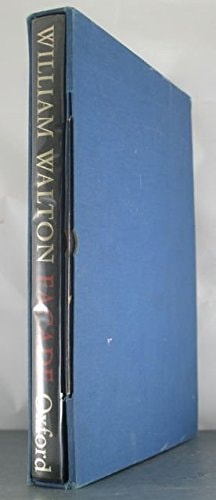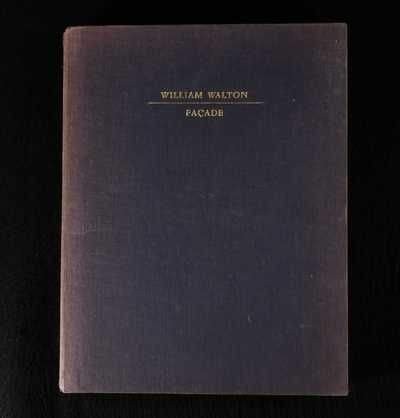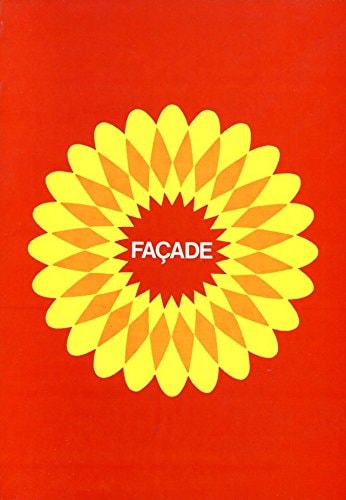
Façade: An Entertainment
0
0
As an Amazon Associate and affiliate partner, Menrva Books earns from qualifying purchases. Learn more
Author Description
Edith Sitwell wrote her Façade poems as studies in rhythms and onomatopoeia. They may appear to be nonsensical, but a continuous thread of allusions and images runs through them and evokes bourgeois culture of turn-of-the-century England. The poet and her brothers Osbert and Sacheverell decided they would be suitable for a drawing-room entertainment, a highbrow extension of country-house charades, and ought therefore to be accompanied by music. They had a tame composer on the premises, but Walton was uncertain what was required and demurred. They had an answer to this: they would ask another of their protégés, the 17-year-old Constant Lambert. The prospect of rivalry was always to act as a spur to Walton he began to work. Walton himself said that Façade was Edith’s idea. ‘She began writing things like the Hornpipe as a deliberate kind of exercise. Then when she read it to us, Sachie said: “This would be much better if you had music with it.” If you do a kind of whistle at the Hornpipe, then you see it first in. It developed from that.’ It is misleading to regard Façade only as frivolous and unrepresentative. It is unique and unrepeatable, as Walton wisely realized, but it contains the essence of him—even to the ‘conservatism’ which earned him so much disrepute in advance circles, for what is one to say of an enfant terrible who was so obviously poking fun, witty and elegant fun, at the modish Parisian-type up-to-dateness in which had been immersed up to the neck? Yet most remarkable of all—in retrospect—is the work’s poetic vein of nostalgia which is not something that has been added by the passing of years. For all that Façade is rightly called an ‘entertainment’, for all its hornpiping, its fanfares, its music-hall parodies, its mock-Rossini and jodelling, for all its wit and skittishness, beneath and through these there runs an awareness of true romance—magical like a spell—evoking warmth of feeling as well as sharpness of satire.
Menrva's Summary
THE PULSE
The central conflict arises from the tension between the rigid, traditional expectations of turn-of-the-century English bourgeois culture and the playful, avant-garde subversion presented through rhythmic poetry and musical accompaniment. Edith Sitwell and William Walton collaborate to construct a performance piece that functions as a highbrow extension of parlor games, utilizing the interplay between nonsensical verse and musical parody to challenge artistic norms. The work operates as a non-linear series of vignettes, where the protagonist—the audience—is invited to navigate a landscape of hornpipes, fanfares, and music-hall tropes. The physical constraints are defined by the drawing-room setting, while the logical constraints are dictated by the rhythmic structures of the poetry and the satirical intent of the score.
INSIDE THE PAGES
- Rhythmic experimentation through onomatopoeic verse
- Satirical commentary on early 20th-century Parisian artistic trends
- Integration of music-hall parodies and mock-classical forms
- Use of allusive imagery to critique bourgeois social structures
- Collaborative structure involving poetry and musical composition
- Nostalgic undertones beneath the surface of skittish wit
- Stylistic focus on elegance and technical precision
- Exploration of the boundary between frivolous entertainment and serious art
THE COLLECTIVE ECHO
Discussion often centers on the unique synthesis of Sitwell’s rhythmic poetry and Walton’s eclectic musical score. Readers and critics frequently highlight the work's ability to balance sharp, satirical jabs at contemporary culture with a genuine, underlying sense of romantic nostalgia. The pacing is noted for its rapid, energetic shifts between different musical and poetic styles, which keeps the audience engaged throughout the performance. Many observers emphasize that while the work appears lighthearted on the surface, it serves as a significant artifact of the modernist period that defies simple categorization.
Page Count:
0
Publication Date:
1951-01-01
Publisher:
Oxford University Press
ISBN-10:
0193593963
ISBN-13:
9780193593961
Poetry
Music
Satire
Modernism
Community Tags
Similar Books