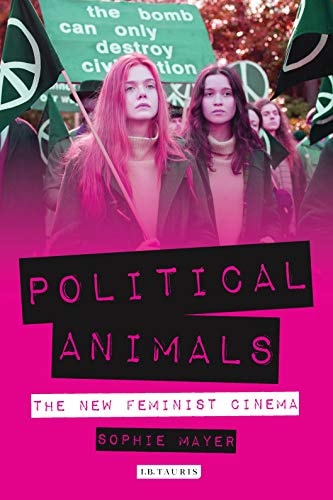
Political Animals: The New Feminist Cinema
0
0
As an Amazon Associate and affiliate partner, Menrva Books earns from qualifying purchases. Learn more
Author Description
Feminist filmmakers are hitting the headlines. The last decade has witnessed: the first Best Director Academy Award won by a woman; female filmmakers reviving, or starting, careers via analogue and digital television; women filmmakers emerging from Saudi Arabia, Palestine, Pakistan, South Korea, Paraguay, Peru, Burkina Faso, Kenya and The Cree Nation; a bold emergent trans cinema; feminist porn screened at public festivals; Sweden's A-Markt for films that pass the Bechdel Test; and Pussy Riot's online videos sending shockwaves around the world. A new generation of feminist filmmakers, curators and critics is not only influencing contemporary debates on gender and sexuality, but starting to change cinema itself, calling for a film world that is intersectional, sustainable, family-friendly and far-reaching. Political Animals argues that, forty years since Laura Mulvey's seminal essay 'Visual Pleasure and Narrative Cinema' identified the urgent need for a feminist counter-cinema, this promise seems to be on the point of fulfilment. Forty years of a transnational, trans-generational cinema has given rise to conversations between the work of now well-established filmmakers such as Abigail Child, Sally Potter and Agnes Varda, twenty-first century auteurs including Kelly Reichardt and Lucretia Martel, and emerging directors such as Sandrine Bonnaire, Shonali Bose, Zeina Daccache, and Hana Makhmalbaf. A new and diverse generation of British independent filmmakers such as Franny Armstrong, Andrea Arnold, Amma Asante, Clio Barnard, Tina Gharavi, Sally El Hoseini, Carol Morley, Samantha Morton, Penny Woolcock, and Campbell X join a worldwide dialogue between filmmakers and viewers hungry for a new and informed point of view. Lovely, vigorous and brave, the new feminist cinema is a political animal that refuses to be domesticated by the persistence of everyday sexism, striking out boldly to claim the public sphere as its own.
Menrva's Summary
THE THESIS
This book investigates the resurgence and evolution of feminist cinema over the past four decades, arguing that it is on the cusp of fulfilling the critical potential identified by Laura Mulvey's seminal essay.
THE SCOPE MAP
- Analysis of contemporary feminist filmmaking trends, including the rise of female directors in mainstream and independent cinema, and the emergence of trans cinema.
- Exploration of the intersectional, sustainable, and inclusive film world advocated by a new generation of feminist filmmakers, curators, and critics.
- Discussions connecting the work of established filmmakers like Agnes Varda and Sally Potter with contemporary auteurs such as Kelly Reichardt and Lucretia Martel, and emerging directors from diverse global backgrounds.
- Examination of the political and social impact of feminist cinema, highlighting its role in challenging everyday sexism and reclaiming the public sphere.
THE AUTHORITY PERSPECTIVE
The book is framed as a timely analysis of a vibrant and evolving field, suggesting it will appeal to scholars and enthusiasts of film studies, gender studies, and contemporary cultural movements. The author's approach appears to synthesize historical context with current trends, positioning the work as a comprehensive overview of feminist cinema's growing influence. The text likely offers a critical perspective on how feminist filmmakers are actively reshaping cinematic narratives and industry practices.
Page Count:
272
Publication Date:
2015-12-30
Publisher:
Bloomsbury Academic
ISBN-10:
1784533718
ISBN-13:
9781784533717
Non-Fiction
Cinema History
Film Studies
Feminist Theory
Gender Studies
Community Tags
Other Editions(2)
Similar Books

Reader Comments
Share Your Thoughts
No comments yet. Be the first to share your thoughts!