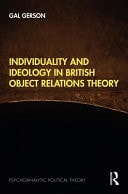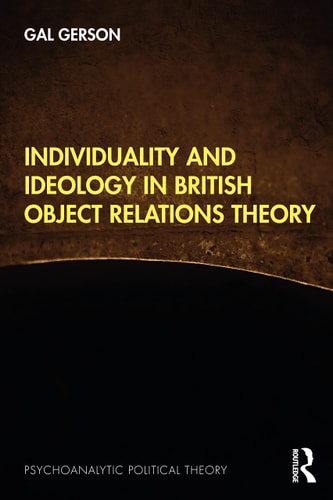
Individuality and Ideology in British Object Relations Theory
0
0
As an Amazon Associate and affiliate partner, Menrva Books earns from qualifying purchases. Learn more
Author Description
Following the work of prominent object relations theorists, such as Fairbairn, Suttie and Winnicott, Gal Gerson explores the correlation between analytical theory and intellectual environment in two ways. He notes the impact that the British object relations school had on both psychology and wider culture, and suggests that the school's outlook involved more than a clinical choice. Gerson first interprets the object relations model as a political theory that completes a certain internal development within liberalism. He later outlines the relationship between the analytical theory and the historical setting in which it formed and took root. By engaging with these questions, Gerson demonstrates the deeper structure and implications of object relation theory for social philosophy. This allows him to answer questions such as: 'What kind of social arrangements do we endorse when we accept object relations theory as a fair description of mind?'; 'What beliefs about power, individuality, and household structure do we take in? What do we give up when doing so?'; and, lastly, 'What does it say about contemporary advanced societies that they have taken in much of the theory's content?' Proposing a novel rethinking of human nature, Individuality and Ideology in British Object Relations Theory provides much-needed insight into how this school of psychoanalytic theory has impacted contemporary social and political life.
Menrva's Summary
THE THESIS
This book investigates the intricate relationship between the development of British object relations theory and the prevailing intellectual and political climate of its time. Gal Gerson examines how the theories of Fairbairn, Suttie, and Winnicott were not merely clinical choices but were deeply influenced by and, in turn, influenced liberalism and wider culture. The book posits object relations theory as a political theory that reflects specific internal developments within liberalism, exploring the assumptions about power, individuality, and social structures that are embedded within its framework. Gerson ultimately demonstrates the profound implications of this psychoanalytic school for social philosophy and contemporary societies.
THE SCOPE MAP
- Analysis of the impact of the British object relations school on psychology and broader culture.
- Interpretation of object relations theory as a political theory completing internal developments within liberalism.
- Exploration of the relationship between analytical theory and its historical formation and rooting.
- Examination of the social arrangements endorsed by accepting object relations theory as a description of the mind.
- Inquiry into beliefs about power, individuality, and household structure adopted through this theory.
- Discussion of what is relinquished when embracing object relations theory.
- Consideration of what the adoption of this theory's content by contemporary advanced societies signifies.
- A novel rethinking of human nature proposed through the lens of object relations theory.
THE AUTHORITY PERSPECTIVE
The book is presented as a novel rethinking of human nature, offering insight into the impact of British object relations theory on contemporary social and political life. It engages with questions about the implicit endorsement of social arrangements, beliefs about power and individuality, and the societal implications of adopting psychoanalytic content. The work aims to demonstrate the deeper structure and implications of object relation theory for social philosophy by connecting analytical theory with its intellectual environment.
Page Count:
172
Publication Date:
2023-05-31
Publisher:
Taylor & Francis Group
ISBN-10:
0367761653
ISBN-13:
9780367761653
History
Psychology
Non-Fiction
Social Philosophy
Psychoanalysis
History of Psychology
Community Tags
Other Editions(2)

Similar Books