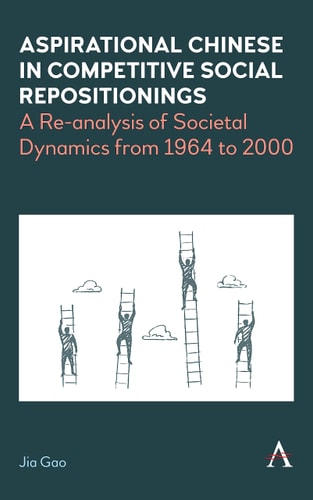
Aspirational Chinese in Competitive Social Repositionings: A Re-Analysis of Societal Dynamics from 1964 to 2000
0
0
As an Amazon Associate and affiliate partner, Menrva Books earns from qualifying purchases. Learn more
Author Description
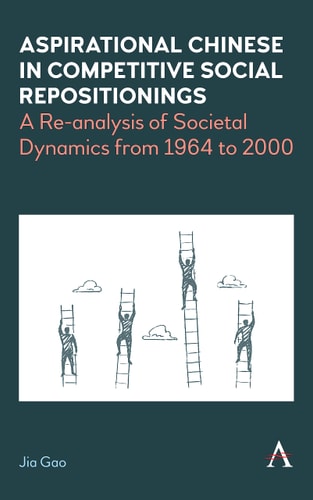
In the past four or so decades, a significant amount of research efforts has been made to examine the rapid and constant social changes taking place in China and the dynamics behind the process, resulting in a rich research literature on a wide range of issues and aspects of China's recent social transformations. However, most of the literature has largely focused on either the political, ideological and policy issues at the macro level or the various forms of spontaneous resistance and protest at the micro level. What has not been adequately analysed is how the majority of ordinary Chinese people has reacted to and influenced the many changes in society over a long time period. This analytical partiality has given an impression that China consists of only two opposing types of people: the oppressing ruling class and the angry oppressed adversaries, restricting our thinking and understanding of Chinese society, its dynamics and its changing trends to the perspectives of elites and their adversaries. Drawing upon a new perspective of competitive social repositioning, and based on the evidence recorded in numerous recently published personal memories and other published accounts, as well as the evidence collected through in-depth interviews, this book seeks to re-analyse the ever-changing, but still under-researched, societal dynamics driving social transformations in China from 1964, when Mao Zedong publicly put forward and propagated his 'Five-Requirements' for selecting heirs to the Chinese communist cause, to 2000 when Jiang Zemin formulated his 'Three-Represents' theory to modify the ideological political thinking and practices of China's ruling elites. Of course, Chinese society has not been evolving exactly in the way that Mao and Jiang anticipated. Instead, China has been driven by a high proportion of its aspirational citizens who have kept repositioning themselves in China's shifting distribution patterns of social resources and changing social
Menrva's Summary
THE THESIS
This book re-analyzes societal dynamics in China from 1964 to 2000 through the lens of competitive social repositioning. It addresses the gap in existing research that often focuses on macro-level political issues or micro-level resistance, neglecting the reactions and influence of ordinary Chinese citizens. By drawing on personal memories, published accounts, and in-depth interviews, the author explores how aspirational citizens have navigated shifting social resources and changing social structures, challenging the dichotomy of an oppressing ruling class and their adversaries.
THE SCOPE MAP
- Analysis of societal dynamics in China between 1964 and 2000.
- Application of the 'competitive social repositioning' perspective.
- Utilizes evidence from personal memories and published accounts.
- Incorporates data from in-depth interviews.
- Examines the influence of ordinary citizens on social transformations.
- Critiques the overemphasis on elite and adversary perspectives in existing literature.
- Covers the period from Mao Zedong's 'Five-Requirements' to Jiang Zemin's 'Three-Represents' theory.
THE AUTHORITY PERSPECTIVE
The book's approach of focusing on the agency of ordinary citizens through competitive social repositioning offers a novel perspective on China's societal dynamics. By integrating personal narratives with broader historical analysis, it aims to provide a more nuanced understanding of the period between 1964 and 2000. The methodology, which combines existing literature with new interview data and personal accounts, suggests a rich and detailed exploration of the subject. This work is positioned to challenge existing scholarly interpretations by highlighting the under-researched role of aspirational individuals in shaping China's transformations.
Page Count:
252
Publication Date:
2025-05-13
Publisher:
Anthem Press
ISBN-10:
1839994797
ISBN-13:
9781839994791
History
Non-Fiction
Sociology
Social Science
Community Tags
Other Editions(2)
Similar Books











Reader Comments
Share Your Thoughts
No comments yet. Be the first to share your thoughts!