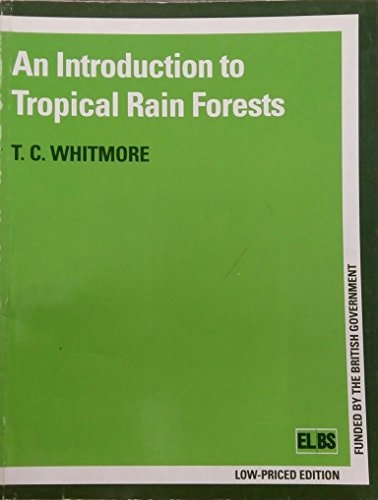
An Introduction to Tropical Rain Forests
0
0
As an Amazon Associate and affiliate partner, Menrva Books earns from qualifying purchases. Learn more
Author Description
This new edition of Whitmore's classic introduction to tropical rain forests has been comprehensively revised and updated, reflecting the changes which have taken place since it was first published in 1990. The sections on human impact have been extended to include a new global assessment of deforestation as well as details of new research on biodiversity and conservation. Discussion of the future of the rain forests and priorities for action is incorporated. The book remains unique in linking rain forest biology and ecology with silviculture, and with concerns over sustainable resource utilization and the future of the tropical rain forests. It includes sections on the diverse animal and plant life forms which are found in the rain forest, and the interconnections between them. Nutrient cycles and forest dynamics are fully explained, with new data on ecophysiology and forest microclimates. The geologic and climatic history of rain forests, and the wide-spread canopy disturbances now understood to have occurred in the past, are explored. Accessibly written, and illustrated throughout with line-drawings and photographs, this is a must for biology and geography students, and anyone else who seeks to know more about the nature and importance of the world's tropical rain forests.
Menrva's Summary
THE THESIS
This text investigates the complex ecological mechanisms, biological diversity, and human-driven pressures defining tropical rain forest ecosystems. T. C. Whitmore, a recognized authority in tropical forestry, synthesizes decades of research to provide a comprehensive overview of forest dynamics. The book utilizes a multidisciplinary framework, integrating silviculture, ecophysiology, and conservation science to explain how these environments function and how they are currently changing on a global scale.
THE SCOPE MAP
What You Will Find
- Detailed analysis of nutrient cycles, forest microclimates, and plant-animal interconnections.
- Examination of the geologic and climatic history of tropical rain forests.
- Assessment of global deforestation trends and modern conservation strategies.
- Integration of silviculture practices with sustainable resource utilization.
THE AUTHORITY PERSPECTIVE
Experts and academics frequently cite this work as a foundational text for students of biology and geography due to its clear synthesis of complex ecological data. Readers note that the text provides a balanced perspective, successfully bridging the gap between pure biological research and practical environmental management.
Page Count:
238
Publication Date:
1993-09-30
Publisher:
Oxford University Press ELBS
ISBN-10:
0194424480
ISBN-13:
9780194424486
Science
Ecology
Forestry
Biology
Geography
Community Tags
Other Editions(2)
Similar Books