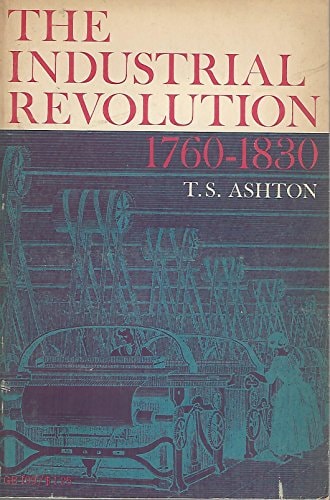
The Industrial Revolution: 1760-1830
0
0
As an Amazon Associate and affiliate partner, Menrva Books earns from qualifying purchases. Learn more
Author Description
The Industrial Revolution has sometimes been regarded as a catastrophe which desecrated the English landscape and brought social oppression and appalling physical hardship to the workers. In Ashton's classic account, however, it is presented as an important and beneficial mark of progress. In spite of destructive wars and a rapid growth of population, the material living standards of most of the British people improved, and the technical innovations not only brought economic rewards but also provoked greater intellectual ingenuity. Lucidly argued and authoritative, this book places the phenomenon of the Industrial Revolution in a stimulating perspective. A new preface by Pat Hudson surveys recent research in the areas focused on by Ashton and a completely updated bibliography ensures that this book will continue to be of value to modern readers for many years to come.
Menrva's Summary
THE THESIS
This work investigates whether the Industrial Revolution in Britain served as a period of social catastrophe or a catalyst for economic and material progress. Thomas S. Ashton, a prominent economic historian, challenges the prevailing view that the era was defined primarily by hardship and environmental degradation. By analyzing population growth, technical innovation, and economic data, he argues that the period fostered significant improvements in living standards and intellectual development despite the pressures of war and rapid demographic shifts.
THE SCOPE MAP
What You Will Find
- Analysis of British economic development between 1760 and 1830
- Examination of the relationship between technical innovation and material living standards
- Evaluation of the impact of population growth on the labor market
- Discussion of the intellectual and economic consequences of industrialization
THE AUTHORITY PERSPECTIVE
Experts and historians recognize this work as a foundational text in the study of the Industrial Revolution. Readers frequently note the clarity of the prose and the author's ability to synthesize complex economic trends into a coherent historical argument.
Page Count:
128
Publication Date:
1964-12-31
Publisher:
Oxford University Press
ISBN-10:
0195002520
ISBN-13:
9780195002522
History
Economic History
British History
Community Tags
Similar Books