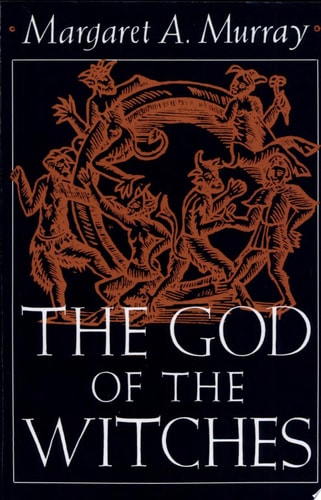
The God of the Witches
0
0
As an Amazon Associate and affiliate partner, Menrva Books earns from qualifying purchases. Learn more
Author Description
This celebrated study of witchcraft in Europe traces the worship of the pre-Christian and prehistoric Horned God from paleolithic times to the medieval period. Murray, the first to turn a scholarly eye on the mysteries of witchcraft, enables us to see its existence in the Middle Ages not as an isolated and terrifying phenomenon, but as the survival of a religion nearly as old as humankind itself, whose devotees held passionately to a view of life threatened by an alien creed. The findings she sets forth, once thought of as provocative and implausible, are now regarded as irrefutable by folklorists and scholars in related fields. Exploring the rites and ceremonies associated with witchcraft, Murray establishes the concept of the "dying god"--the priest-king who was ritually killed to ensure the country and its people a continuity of fertility and strength. In this light, she considers such figures as Thomas a Becket, Joan of Arc, and Gilles de Rais as spiritual leaders whose deaths were ritually imposed.Truly a classic work of anthropology, and written in a clear, accessible style that anyone can enjoy, The God of the Witches forces us to reevaluate our thoughts about an ancient and vital religion.
Menrva's Summary
THE THESIS
Does the history of European witchcraft represent the survival of a prehistoric, organized religion centered on the worship of a Horned God? Margaret Murray, a pioneering anthropologist, utilizes historical records and folklore to argue that witchcraft was not a manifestation of devil worship, but a persistent, ancient faith that predated Christianity. She posits that the rituals and figures often associated with medieval heresy were actually remnants of a structured, fertility-based religious system that maintained continuity through the ritual sacrifice of a priest-king.
THE SCOPE MAP
What You Will Find
- Analysis of the Horned God as a central deity from the Paleolithic era through the medieval period.
- Examination of the ritual "dying god" concept and its application to historical figures like Joan of Arc and Thomas a Becket.
- Investigation into the rites, ceremonies, and organizational structure of the witch cult.
- Historical evidence linking medieval witchcraft to pre-Christian religious practices.
THE AUTHORITY PERSPECTIVE
While Murray's work was once considered highly controversial, it remains a foundational text in the study of folklore and the history of religion. Readers and scholars frequently note that while her specific conclusions are debated by modern historians, the book is essential for understanding the development of anthropological perspectives on European witchcraft.
Page Count:
224
Publication Date:
1970-09-15
Publisher:
Oxford University Press
ISBN-10:
0195012704
ISBN-13:
9780195012705
History
Religion
Demonology
Anthropology
Folklore
Witchcraft
Magic