
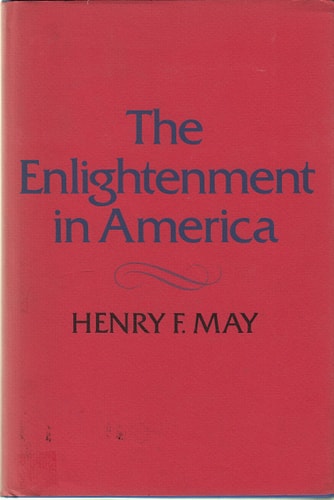
The Enlightenment in America
0
0
As an Amazon Associate and affiliate partner, Menrva Books earns from qualifying purchases. Learn more
Author Description
It has long been taken for granted that the ideas of the European Enlightenment - of men like Locke, Hume, Voltaire, or Rousseau - profoundly affected America during the Revolutionary age. Yet there has been no full-length analysis of the movement of ideas from Europe to America in the late 18th century. Now one of American's leading intellectual historians has written a magisterial book that fills the gap.May defines the Enlightenment broadly. Men of the Enlightenment were all those who believed that their own age was more enlightened than the past and that man and nature are best understood through the use of natural faculties. He treats the Enlightenment as a 'religion', even though many of its leading proponents opposed organized religion. Throughout the book he relates the Enlightenment to Protestant Christianity, for it is out of the clashes and reconciliations between those two systems that 19th-century American culture - a culture that lasted almost to our own time--took shape.Defined so broadly, the religion of Enlightenment obviously included many different kinds of people - deists and skeptics and liberal Christians, aristocrats and democrats, conservatives and revolutionaries. May divides the European Enlightenment into four major categories, and shows how each had a different effect in America.Obviously some ideas could be transmitted more easily than others to a society overwhelmingly Protestant and rapidly becoming democratic. May shows how the Enlightenment affected the thoughts and actions of major figures like Jefferson, Franklin, and John Adams, but these familiar figures are treated against a background of less well-known people - doctors and ministers, scientists and planters and politicians.Beginning with the movement of relatively conservative British Enlightened ideas to America before the Revolution, May moves on to the transmission of the skeptical thought of men like Voltaire and Hume, and the revolutionary prophesies and programs of Rouss
Menrva's Summary
THE THESIS
This work investigates the complex transmission and adaptation of European Enlightenment thought within the American colonies and the early United States. Henry F. May, a distinguished intellectual historian, utilizes a broad definition of the Enlightenment to examine how these ideas interacted with the prevailing Protestant Christian culture of the era. By analyzing the interplay between secular philosophy and religious tradition, the author argues that this synthesis formed the bedrock of 19th-century American cultural identity.
THE SCOPE MAP
What You Will Find
- A four-part categorization of European Enlightenment thought and its specific American manifestations.
- Analysis of the intellectual contributions of major figures such as Jefferson, Franklin, and Adams alongside lesser-known practitioners.
- Examination of the tension and reconciliation between skeptical European philosophy and American Protestantism.
- A historical survey of the movement of ideas from conservative British origins to radical revolutionary programs.
THE AUTHORITY PERSPECTIVE
Scholars and historians recognize this text as a foundational analysis of American intellectual development. Readers frequently note the academic density of the prose, which provides a comprehensive framework for understanding the ideological origins of the United States.
Page Count:
448
Publication Date:
1978-02-09
Publisher:
Oxford University Press
ISBN-10:
0195023676
ISBN-13:
9780195023671
History
Philosophy
Intellectual History
Enlightenment
American History
Community Tags
Other Editions(2)
Similar Books




Reader Comments
Share Your Thoughts
No comments yet. Be the first to share your thoughts!