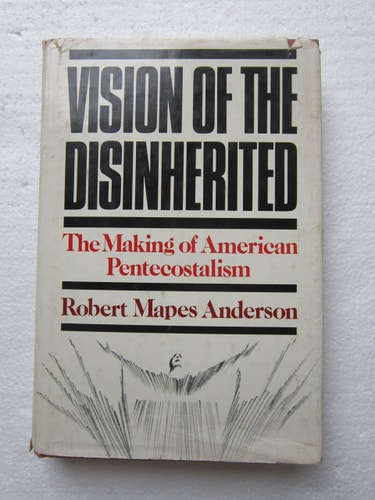
Vision of the Disinherited: The Making of American Pentecostalism
0
0
As an Amazon Associate and affiliate partner, Menrva Books earns from qualifying purchases. Learn more
Author Description
This study is limited to the formative phase of the Pentecostal movement from the late nineteenth century to the early 1930s. The Depression years were years of phenomenal growth for the Pentecostals, but by then the movement had entered a different stage of development; much of the spontaneous element had become ritualized and what had been a fluid movement had largely crystallized into a number of denominations. While my primary focus has been on Pentecostalism as a social movement, I have been ever mindful of the interaction between theological and sociological influences, between ideas and action. - Introduction.
Menrva's Summary
THE THESIS
This study investigates the socio-historical origins and formative development of the American Pentecostal movement during its initial expansion. Robert C. Anderson examines the movement from the late nineteenth century through the early 1930s, analyzing how Pentecostalism transitioned from a spontaneous, fluid social phenomenon into a collection of established, ritualized denominations. The author balances theological doctrine with sociological analysis to explain how religious ideas influenced collective action and social identity.
THE SCOPE MAP
What You Will Find
- Analysis of the formative phase of Pentecostalism from the late 1800s to the early 1930s.
- Examination of the transition from spontaneous religious expression to institutionalized denominational structures.
- Investigation into the intersection of theological belief systems and sociological social movement theory.
- Historical context regarding the impact of the Great Depression on the growth and stabilization of the movement.
THE AUTHORITY PERSPECTIVE
Scholars and historians of American religion frequently cite this work for its focus on the sociological mechanics of early Pentecostalism. The text is recognized for providing a balanced view of how the movement evolved from a grassroots phenomenon into a structured religious institution.
Page Count:
346
Publication Date:
1979-05-17
Publisher:
Oxford University Press
ISBN-10:
0195025024
ISBN-13:
9780195025026
History
Religion
Sociology
Christianity
American History
Pentecostalism
Community Tags
Similar Books