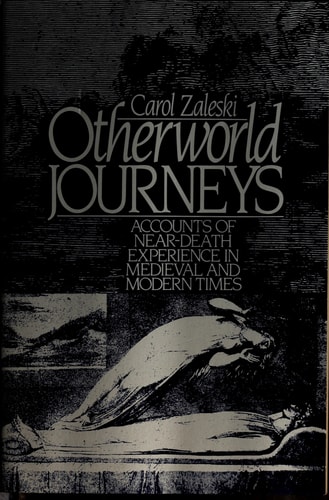
Otherworld Journeys: Accounts of Near-Death Experience in Medieval and Modern Times
0
0
As an Amazon Associate and affiliate partner, Menrva Books earns from qualifying purchases. Learn more
Author Description
In the past decade there has been an explosion of interest in "near-death" experiences. Dozens of books, articles, television shows, and films have appeared in which people who have survived a close brush with death reveal their extraordinary visions and ecstatic feelings at the moment they "died". They tell of journeying through a tunnel to a realm of light, seeing a visual record of their past deeds, encountering a benevolent spirit, and returning to life permanently transformed. What do these experiences mean? Does visionary testimony prove that life continues after death? What does the popularity of these reports tell us about our culture? Otherworld Journeys is the most comprehensive treatment to date of the evidence surrounding near-death experiences. Zaleski looks at researchers' findings, first-person accounts of survivors, and possible medical or psychological explanations. She is the first to place this material in historical perspective, pointing out the ways in which it reflects the influence of contemporary culture. The book shows that modern near-death reports belong to a vast family of otherworld journey tales, with representatives in nearly ever religious heritage. In order to identify universal as well as culturally specific features, Zaleski compares near-death narratives in two distinct periods of Western society: medieval Christendom and twentieth-century secular America. She calls attention to the profound similarities, such as the life-review and the transforming after-effects of the vision, and to striking contrasts, such as the absence of hell or punishment scenes from modern accounts. Finally, Zaleski considers current efforts to explain near-death experience scientifically, mediating between the "debunkers" and the near-death researchers. She concludes by suggesting that the otherworld vision is a key for understanding imaginative and religious experience in general.
Menrva's Summary
THE THESIS
How do near-death experiences function as a bridge between historical religious traditions and contemporary secular interpretations of the afterlife? Carol Zaleski, a scholar of religion, examines the phenomenon of near-death experiences by synthesizing medical data, psychological theories, and historical accounts. She argues that these visions are not merely biological anomalies but are deeply embedded in the cultural and religious frameworks of the societies in which they occur. By comparing medieval Christian narratives with modern American reports, Zaleski provides a critical lens through which to view the human impulse to interpret the boundary between life and death.
THE SCOPE MAP
What You Will Find
- A comparative analysis of near-death narratives from medieval Christendom and twentieth-century America.
- An evaluation of medical and psychological theories used to explain visionary experiences.
- A historical survey of otherworld journey tales across diverse religious heritages.
- A critical discussion on the influence of contemporary culture on the content and interpretation of afterlife visions.
THE AUTHORITY PERSPECTIVE
Scholars and readers frequently cite this work as a foundational, balanced text that successfully bridges the gap between scientific skepticism and religious studies. It is widely regarded for its rigorous historical methodology and its ability to provide a neutral, comprehensive overview of a highly debated subject.
Page Count:
288
Publication Date:
1987-03-26
Publisher:
Oxford University Press
ISBN-10:
0195039157
ISBN-13:
9780195039153
History
Religion
Philosophy
Psychology
Sociology
Special Topics
Sociology of Death
Community Tags
Similar Books














