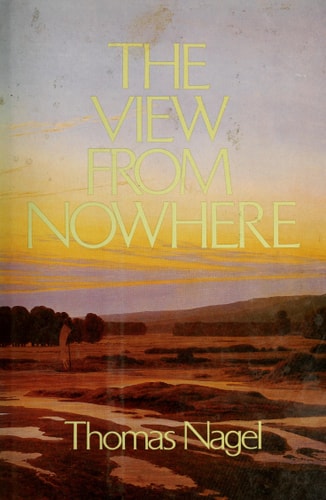
The View From Nowhere
0
0
As an Amazon Associate and affiliate partner, Menrva Books earns from qualifying purchases. Learn more
Author Description
Human beings have the unique ability to view the world in a detached way: We can think about the world in terms that transcend our own experience or interest, and consider the world from a vantage point that is, in Nagel's words, "nowhere in particular". At the same time, each of us is a particular person in a particular place, each with his own "personal" view of the world, a view that we can recognize as just one aspect of the whole. How do we reconcile these two standpoints--intellectually, morally, and practically? To what extent are they irreconcilable and to what extent can they be integrated? Thomas Nagel's ambitious and lively book tackles this fundamental issue, arguing that our divided nature is the root of a whole range of philosophical problems, touching, as it does, every aspect of human life. He deals with its manifestations in such fields of philosophy as: the mind-body problem, personal identity, knowledge and skepticism, thought and reality, free will, ethics, the relation between moral and other values, the meaning of life, and death. Excessive objectification has been a malady of recent analytic philosophy, claims Nagel, it has led to implausible forms of reductionism in the philosophy of mind and elsewhere. The solution is not to inhibit the objectifying impulse, but to insist that it learn to live alongside the internal perspectives that cannot be either discarded or objectified. Reconciliation between the two standpoints, in the end, is not always possible.
Menrva's Summary
THE THESIS
How can human beings reconcile the objective, detached view of the world with the subjective, personal perspective inherent to our individual existence? Thomas Nagel, a prominent philosopher, examines the tension between these two standpoints, arguing that this duality is the source of many persistent philosophical problems. He contends that while the objectifying impulse is valuable, it must be balanced against the internal perspective to avoid the pitfalls of reductionism. The work explores how this fundamental divide influences areas ranging from the mind-body problem to the nature of ethics and personal identity.
THE SCOPE MAP
What You Will Find
- Analysis of the mind-body problem and personal identity
- Examination of the limits of knowledge and skepticism
- Discussion on free will and the nature of moral values
- Philosophical inquiry into the meaning of life and death
- Critique of reductionist tendencies in analytic philosophy
THE AUTHORITY PERSPECTIVE
Experts recognize this work as a significant contribution to contemporary analytic philosophy, often citing it for its clear articulation of the objective-subjective divide. Readers frequently note the intellectual rigor of the prose, which challenges the reader to engage with complex metaphysical and ethical questions.
Page Count:
256
Publication Date:
1986-01-23
Publisher:
Oxford University Press
ISBN-10:
0195036689
ISBN-13:
9780195036688
Non-Fiction
Philosophy
Metaphysics
Ethics
Mind & Body
Life
Epistemology
Objectivity
Community Tags
Similar Books