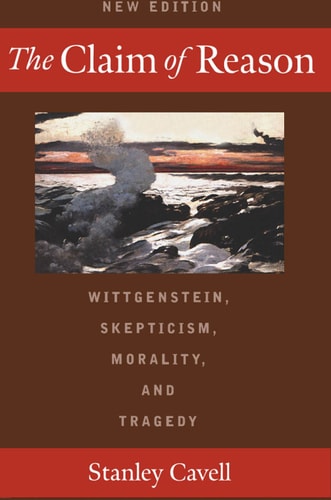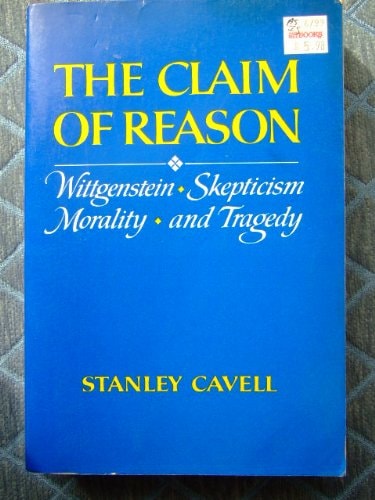
The Claim of Reason: Wittgenstein, Skepticism, Morality, and Tragedy
0
0
As an Amazon Associate and affiliate partner, Menrva Books earns from qualifying purchases. Learn more
Author Description
The first three parts of this book deal with the tension between ordinary language philosophy (as envisioned in the writings of J.L. Austin and the later Wittgenstein) and the 'tradition.' In the fourth part the author explores the problem of skepticism and takes a broad view of its consequences.
Menrva's Summary
THE THESIS
This work investigates the fundamental tension between ordinary language philosophy and the philosophical tradition, specifically addressing how skepticism shapes our understanding of morality and tragedy. Stanley Cavell, a prominent philosopher of the 20th century, draws upon the later writings of Ludwig Wittgenstein and J.L. Austin to construct a rigorous framework for examining the human condition. He argues that skepticism is not merely an intellectual puzzle to be solved, but a pervasive condition of human existence that influences our moral lives and our engagement with tragic literature.
THE SCOPE MAP
What You Will Find
- Analysis of ordinary language philosophy as defined by J.L. Austin and Ludwig Wittgenstein
- A comprehensive examination of skepticism as a philosophical and existential problem
- Exploration of the intersection between moral philosophy and tragic narratives
- Methodological approaches to reading philosophical texts alongside literary works
THE AUTHORITY PERSPECTIVE
Scholars frequently identify this text as a seminal contribution to the intersection of philosophy and literature, noting its dense and demanding prose style. It is widely regarded as a foundational resource for those studying the implications of Wittgensteinian thought on contemporary ethical and aesthetic discourse.
Page Count:
511
Publication Date:
1982-07-29
Publisher:
Oxford University Press
ISBN-10:
0195031954
ISBN-13:
9780195031959
Philosophy
Epistemology
Ethics
Literary Criticism