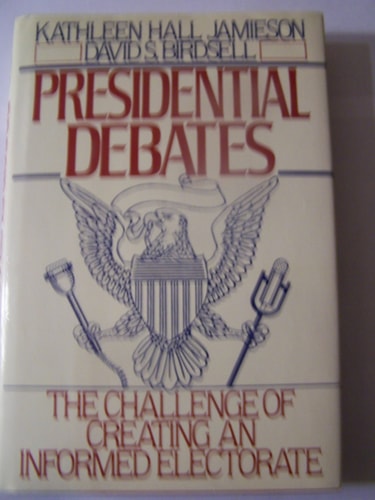
Presidential Debates: The Challenge of Creating an Informed Electorate
0
0
As an Amazon Associate and affiliate partner, Menrva Books earns from qualifying purchases. Learn more
Author Description
Presidential debates have had mixed reviews. Advocates praise debates as a way of making issues more central to the campaign. Others criticize them as little more than joint press conferences. How important are these debates? Do they really test knowledge and vision? Do they sort good ideas from bad, or reveal important character traits and habits of mind? In short, do they provide voters with what they need to know to choose a president?To address these questions, the authors place contemporary debates in their cultural and historical context, tracing their origins and development in the American political tradition, from the eighteenth century to the present. Although the Kennedy-Nixon TV confrontations were an historical first, debate was an element of American electoral politics by 1788 and a staple of policy deliberation throughout the colonial period. Indeed, much of the confusion over the value of debates stems in part from the long tradition of political debating in America. Thus, to make the most productive use of debate in modern presidential politics, the authors argue, we must respond to the history of this tradition.The book concludes with recommendations to preserve the best elements of traditional debate while adapting to the requirements of the broadcast age. The reforms they advocate include: substantive debates between major party representatives between elections; alternative formats; use of visual aids in debates; follow-up press conferences; a focus on fewer issues and increased experimentation in the primaries.Presidential debates provide voters with a rare opportunity to evaluate political reasoning on complex issues. In suggesting ways to make presidential debates even more effective, this thought-provoking volume makes an important contribution to America's political future.
Menrva's Summary
THE THESIS
This volume investigates whether contemporary presidential debates effectively provide voters with the necessary information to make informed electoral choices. The authors, David S. Birdsell and Kathleen Hall Jamieson, utilize historical analysis and political theory to evaluate the evolution of debate formats in the United States. By tracing the tradition from the eighteenth century to the modern broadcast era, they argue that current debate structures often fail to meet the demands of an informed electorate and require specific, structural reforms to remain relevant.
THE SCOPE MAP
What You Will Find
- Historical analysis of American political debate traditions dating back to 1788.
- Comparative study of colonial policy deliberation versus modern televised confrontations.
- Proposed reforms including alternative debate formats, increased use of visual aids, and inter-election substantive debates.
- Evaluation of the role of debates in testing candidate knowledge, vision, and character traits.
THE AUTHORITY PERSPECTIVE
Experts and political scientists frequently cite this work as a foundational text for understanding the intersection of media and electoral politics. Readers often note the academic rigor of the historical research and the practical utility of the authors' proposed policy recommendations.
Page Count:
276
Publication Date:
1988-10-13
Publisher:
Oxford University Press
ISBN-10:
019505539X
ISBN-13:
9780195055399
Politics
History
Television in politics
American History
Communication
United States
Government
Community Tags
Similar Books