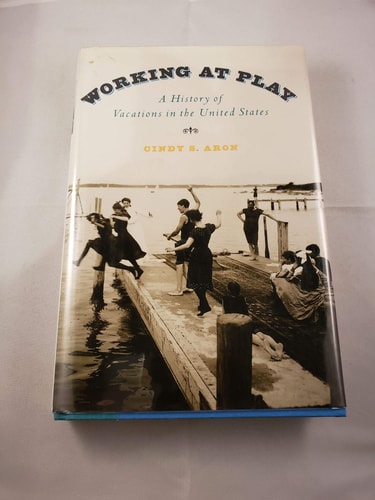
Working at Play: A History of Vacations in the United States
0
0
As an Amazon Associate and affiliate partner, Menrva Books earns from qualifying purchases. Learn more
Author Description
No one works harder at playing than Americans. Indeed, as Cindy Aron reveals in this intriguing account, the American vacation has seen a constant tension between labor and leisure, especially in the 19th and early 20th century, when we often struggled to protect ourselves from the sin of idleness.In Working at Play, Aron offers the first full length history of how Americans have vacationed--from eighteenth-century planters who summered in Newport to twentieth-century urban workers who headed for camps in the hills. In the early nineteenth century, Aron shows, vacations were taken for health more than for fun, as the wealthy traveled to watering places, seeking cures for everything from consumption to rheumatism. But starting in the 1850s, the growth of a white collar middle class and the expansion of railroads made vacationing a mainstream activity. Aron charts this growth with grace and insight, tracing the rise of new vacation spots as the nation and the middle class blossomed. She shows how late nineteenth-century resorts became centers of competitive sports. Bowling, tennis, golf, hiking, swimming, and boating absorbed the hours. But as vacationing grew, she writes, fears of the dangers of idleness bloomed with it. Self improvement vacations flourished; religious camp grounds became established resorts, where gambling, drinking, and bathing on Sunday were banned. Asbury Park, named after Francis Asbury, the first American Methodist bishop, quickly became one of the most popular getaways for the devout.With vivid detail and much insight, Working at Play offers a lively history of the vacation, throwing new light on the place of work and rest in American culture.
Menrva's Summary
THE THESIS
This book investigates the historical evolution of the American vacation and the persistent cultural tension between the necessity of leisure and the moral anxiety surrounding idleness. Cindy S. Aron, a historian specializing in American social history, utilizes primary source documents, personal accounts, and archival records to trace the development of vacationing from the eighteenth century through the early twentieth century. She argues that the American approach to time off has been fundamentally shaped by a work-centric ethos that required leisure to be justified through health, self-improvement, or productivity.
THE SCOPE MAP
What You Will Find
- Historical analysis of American vacation patterns from the 18th century to the early 20th century.
- Examination of the transition from health-focused retreats to recreational and competitive sports-based resorts.
- Case studies of specific locations such as Newport and Asbury Park to illustrate shifting social norms.
- Exploration of the influence of the rising white-collar middle class and railroad expansion on leisure accessibility.
THE AUTHORITY PERSPECTIVE
Historians and cultural critics frequently cite this work as a foundational text for understanding the intersection of labor history and leisure studies in the United States. Readers often note the accessible prose style, which effectively balances academic rigor with a clear, chronological narrative of American social development.
Page Count:
336
Publication Date:
1999-05-13
Publisher:
Oxford University Press
ISBN-10:
0195055845
ISBN-13:
9780195055849
History
Social History
Activities & Sports
American History
Vacations
Sociology
Community Tags
Similar Books