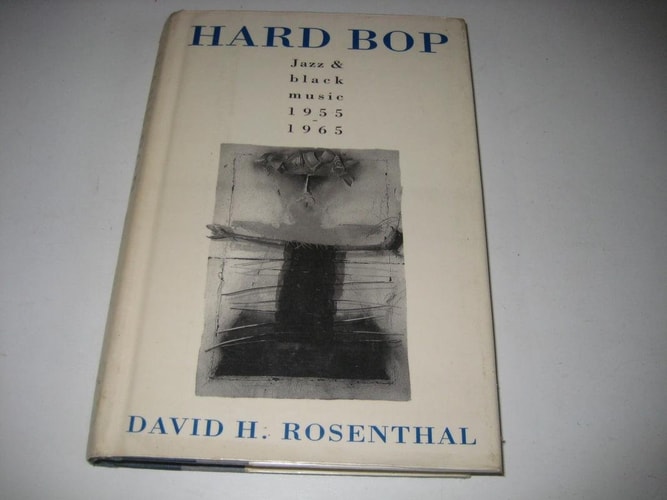
Hard Bop: Jazz and Black Music 1955-1965
0
0
As an Amazon Associate and affiliate partner, Menrva Books earns from qualifying purchases. Learn more
Author Description
It's nineteen fifty-something, in a dark, cramped, smoke-filled room. Everyone's wearing black. And on-stage a tenor is blowing his heart out, a searching, jagged saxophone journey played out against a moody, walking bass and the swish of a drummer's brushes. To a great many listeners--from African American aficionados of the period to a whole new group of fans today--this is the very embodiment of jazz. It is also quintessential hard bop. In this, the first thorough study of the subject, jazz expert and enthusiast David H. Rosenthal vividly examines the roots, traditions, explorations and permutations, personalities and recordings of a climactic period in jazz history.Beginning with hard bop's origins as an amalgam of bebop and R&B, Rosenthal narrates the growth of a movement that embraced the heavy beat and bluesy phrasing of such popular artists as Horace Silver and Cannonball Adderley; the stark, astringent, tormented music of saxophonists Jackie McLean and Tina Brooks; the gentler, more lyrical contributions of trumpeter Art Farmer, pianists Hank Jones and Tommy Flanagan, composers Benny Golson and Gigi Gryce; and such consciously experimental and truly one-of-a-kind players and composers as Andrew Hill, Sonny Rollins, John Coltrane, Thelonious Monk, and Charles Mingus. Hard bop welcomed all influences--whether Gospel, the blues, Latin rhythms, or Debussy and Ravel--into its astonishingly creative, hard-swinging orbit. Although its emphasis on expression and downright "badness" over technical virtuosity was unappreciated by critics, hard bop was the music of black neighborhoods and the last jazz movement to attract the most talented young black musicians.Fortunately, records were there to catch it all. The years between 1955 and 1965 are unrivaled in jazz history for the number of milestones on vinyl. Miles Davis's Kind of Blue, Charles Mingus's Mingus Ah Um, Thelonious Monk's Brilliant Corners, Horace Silver's Further Explorations--Rosenthal gives a perceptive
Menrva's Summary
THE THESIS
What were the defining characteristics and cultural significance of the hard bop movement in jazz between 1955 and 1965? David H. Rosenthal, a dedicated jazz scholar and enthusiast, investigates the evolution of this genre as a synthesis of bebop, rhythm and blues, and gospel influences. He argues that hard bop served as the final jazz movement to maintain a deep, organic connection to black urban neighborhoods while fostering a unique period of creative experimentation among legendary musicians.
THE SCOPE MAP
What You Will Find
- A comprehensive historical analysis of the hard bop movement from 1955 to 1965.
- Profiles of influential artists including Horace Silver, Cannonball Adderley, Jackie McLean, and Sonny Rollins.
- Examination of diverse musical influences ranging from Latin rhythms to classical composers like Debussy and Ravel.
- A critical survey of seminal recordings that defined the era's aesthetic and technical standards.
THE AUTHORITY PERSPECTIVE
Experts recognize this work as a foundational text for understanding the transition of jazz during the mid-twentieth century. Readers frequently note the author's ability to balance technical musical analysis with the broader social context of the era.
Page Count:
224
Publication Date:
1992-05-14
Publisher:
Oxford University Press
ISBN-10:
0195058690
ISBN-13:
9780195058697
History
Music
Jazz
African Americans
Music Criticism
Community Tags
Similar Books