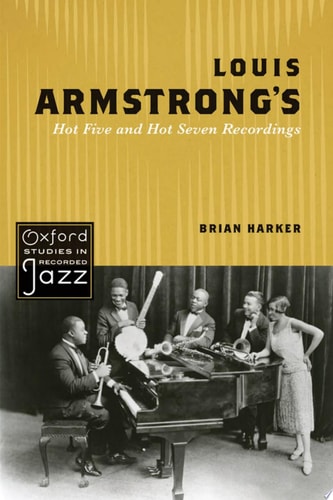
Louis Armstrong's Hot Five and Hot Seven Recordings
0
0
As an Amazon Associate and affiliate partner, Menrva Books earns from qualifying purchases. Learn more
Author Description
For jazz historians, Louis Armstrong's Hot Five and Hot Seven recordings mark the first revolution in the history of a music riven by upheaval. Yet few traces of this revolution can be found in the historical record of the late 1920s, when the discs were made. Even black newspapers covered Armstrong as just one name among many, and descriptions of his playing, while laudatory, bear little resemblance to those of today. Through a careful analysis of seven seminal recordings in this compact and engaging book, author Brian Harker recaptures the perspective of Armstrong's original audience without abandoning that of today's listeners. The world of vaudeville and show business provide crucial context to his readings, revealing how the demands of making a living in a competitive environment catalyzed Armstrong's unique artistic gifts. Invoking a breadth of influences ranging from New Orleans clarinet style to Guy Lombardo, and from tap dancing to classical music, Louis Armstrong's Hot Five and Hot Seven Recordings offers bold insights, fresh anecdotes, and, ultimately, a new interpretation of Louis Armstrong and his most influential body of work.
Menrva's Summary
THE THESIS
How did Louis Armstrong’s Hot Five and Hot Seven recordings fundamentally alter the trajectory of jazz despite the limited contemporary documentation of their impact? Brian Harker, a scholar of jazz history, utilizes a combination of archival research and musicological analysis to re-examine these seminal sessions. By situating Armstrong within the competitive landscape of 1920s vaudeville and show business, Harker argues that the pressures of the industry were instrumental in shaping Armstrong’s creative output. The book provides a framework for understanding these recordings not merely as isolated artifacts, but as products of a specific, high-stakes professional environment.
THE SCOPE MAP
What You Will Find
- Detailed musicological analysis of seven seminal recordings from the Hot Five and Hot Seven sessions.
- Historical context regarding the vaudeville circuit and the professional demands placed on jazz musicians in the late 1920s.
- Examination of diverse stylistic influences, including New Orleans clarinet traditions, tap dance, and classical music.
- Synthesis of contemporary black newspaper coverage and modern critical perspectives to bridge the gap between historical reception and current appreciation.
THE AUTHORITY PERSPECTIVE
Experts recognize this work as a significant contribution to the study of early jazz, particularly for its ability to contextualize Armstrong’s technical innovations within the realities of the entertainment industry. Readers frequently note the clarity of the prose and the author's success in balancing academic rigor with accessible historical narrative.
Page Count:
200
Publication Date:
2011-01-01
Publisher:
Oxford University Press
ISBN-10:
0199831254
ISBN-13:
9780199831258
Music
Biography
History
Jazz
Music Criticism
Music History
Humanities
Music
Community Tags
Other Editions(2)
Similar Books