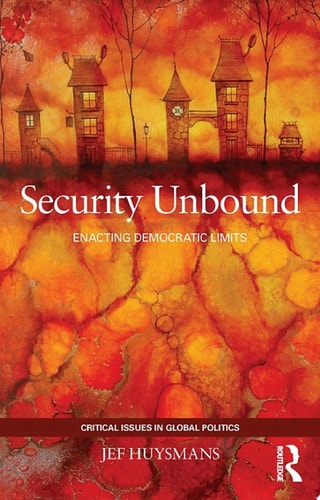
Security Unbound
0
0
As an Amazon Associate and affiliate partner, Menrva Books earns from qualifying purchases. Learn more
Author Description
Security concerns have mushroomed. Increasingly numerous areas of life are governed by security policies and technologies. Security Unbound argues that when insecurities pervade how we relate to our neighbours, how we perceive international politics, how governments formulate policies, at stake is not our security but our democracy. Security is not in the first instance a right or value but a practice that challenges democratic institutions and actions. We are familiar with emergency policies in the name of national security challenging parliamentary processes, the space for political dissent, and fundamental rights. Yet, security practice and technology pervade society heavily in very mundane ways without raising national security crises, in particular through surveillance technology and the management of risks and uncertainties in many areas of life. These more diffuse security practices create societies in which suspicion becomes a default way of relating and governing relations, ranging from neighbourhood relations over financial transactions to cross border mobility. Security Unbound demonstrates that governing through suspicion poses serious challenges to democratic practice. Some of these challenges are familiar, such as the erosion of the right to privacy; others are less so, such as the post-human challenge to citizenship. Security unbound provokes us to see that the democratic political stake today is not our security but preventing insecurity from becoming the organising principle of political and social life.
Menrva's Summary
THE THESIS
The proliferation of security policies and technologies across all aspects of life fundamentally challenges democratic institutions and practices. The book argues that security, rather than being a right or value, has become a pervasive practice that erodes democracy. While emergency national security measures are a known threat to parliamentary processes and dissent, the more diffuse security practices, such as surveillance and risk management in everyday life, foster a society governed by suspicion. This pervasive suspicion, from financial transactions to cross-border mobility, poses significant threats to democratic practice, including the erosion of privacy and novel challenges to citizenship.
THE SCOPE MAP
- Analysis of how security concerns have mushroomed and govern numerous areas of life.
- Argument that the primary stake in contemporary security debates is democracy, not security itself.
- Examination of how security practices, beyond national security crises, challenge democratic institutions.
- Discussion of the role of surveillance technology and risk management in creating societies of suspicion.
- Exploration of the challenges posed by governing through suspicion, including the erosion of privacy.
- Consideration of less familiar challenges, such as the post-human challenge to citizenship.
- Provocation to prevent insecurity from becoming the organizing principle of political and social life.
THE AUTHORITY PERSPECTIVE
This book is recognized for its critical examination of the pervasive nature of security in contemporary life and its profound implications for democracy. The author, Jef Huysmans, is noted for dissecting how security practices, both overt and subtle, reshape societal relations and governance. The work is understood to challenge conventional notions of security, positing that its unchecked growth poses a greater threat to democratic institutions than insecurity itself. It is seen as a significant contribution to understanding the complex interplay between security, suspicion, and the future of democratic practice.
Page Count:
224
Publication Date:
2014-05-09
Publisher:
Taylor & Francis
ISBN-10:
1317813073
ISBN-13:
9781317813071
Non-Fiction
Politics
Sociology
Security Studies
Democracy