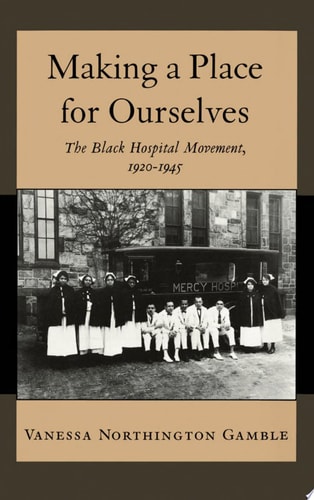
Making a Place for Ourselves: The Black Hospital Movement, 1920-1945
0
0
As an Amazon Associate and affiliate partner, Menrva Books earns from qualifying purchases. Learn more
Author Description
In a perfect world of medical science, hospitals would be value-neutral medical establishments, healing and treating all people in need equally. Hospitals, in addition to being medical facilities, are social institutions that reflect and reinforce the beliefs and values of the wider society. Making a Place for Ourselves examines an important but not widely chronicled event at the intersection of African-American history and American medical history - the black hospital movement. A practical response to the racial realities of American life, the movement was a "self-help" endeavor - immediate improvement of separate medical institutions insured the advancement and health of African Americans until the slow process of integration could occur. Recognizing that their careers depended on access to hospitals, black physicians associated with the two leading black medical societies, the National Medical Association (NMA) and the National Hospital Association (NHA), initiated the movement in the 1920s in order to upgrade the medical and education programs at black hospitals. Black physicians "made a place for themselves" within the profession of medicine by improving the status and training of black hospitals between 1920 and 1945, a time when few black physicians had options beyond the separate but equal black medical world. Vanessa Northington Gamble examines the activities of these physicians and those of black community organizations, local and federal governments, and major health care organizations. She focuses on three case studies (Cleveland, Chicago, and Tuskegee) to demonstrate how the black hospital movement reflected the goals, needs, and divisions within the African-American community - and the state of American race relations. Exploring ideological tensions within the black community over the existence of black hospitals, Gamble shows that black hospitals were essential for the professional lives of black physicians before the emergence of the civil rights movement.
Menrva's Summary
THE THESIS
This book investigates the origins, objectives, and socio-political impact of the black hospital movement in the United States between 1920 and 1945. Vanessa Northington Gamble, a physician and historian, utilizes archival research and institutional records to analyze how black medical professionals navigated systemic racial exclusion. She argues that these hospitals functioned as vital social and professional institutions that provided necessary care and career opportunities during an era of segregation. The text frames the movement as a strategic self-help endeavor intended to bolster community health while simultaneously challenging the limitations of the separate-but-equal doctrine.
THE SCOPE MAP
What You Will Find
- Detailed examination of the National Medical Association and the National Hospital Association.
- Comparative case studies focusing on the medical landscapes of Cleveland, Chicago, and Tuskegee.
- Analysis of the intersection between federal policy, community activism, and medical professionalization.
- Exploration of the ideological debates regarding the necessity of segregated medical facilities versus the goal of integration.
THE AUTHORITY PERSPECTIVE
Scholars and historians frequently cite this work as a foundational text for understanding the development of African American medical institutions in the early twentieth century. The prose is noted for its academic rigor and its ability to synthesize complex social history with specific institutional developments.
Page Count:
296
Publication Date:
1995-03-23
Publisher:
Oxford University Press
ISBN-10:
0195078896
ISBN-13:
9780195078893
History
MEDICAL History
Public Health
African Americans
Sociology
Community Tags
Similar Books