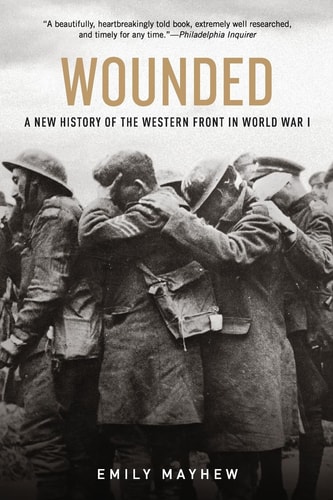
Wounded: A New History of the Western Front in World War I
0
0
As an Amazon Associate and affiliate partner, Menrva Books earns from qualifying purchases. Learn more
Author Description
The number of soldiers wounded in World War I is, in itself, devastating: over 21 million military wounded, and nearly 10 million killed. On the battlefield, the injuries were shocking, unlike anything those in the medical field had ever witnessed. The bullets hit fast and hard, went deep and took bits of dirty uniform and airborne soil particles in with them. Soldier after soldier came in with the most dreaded kinds of casualty: awful, deep, ragged wounds to their heads, faces and abdomens. And yet the medical personnel faced with these unimaginable injuries adapted with amazing aptitude, thinking and reacting on their feet to save millions of lives.In Wounded, Emily Mayhew tells the history of the Western Front from a new perspective: the medical network that arose seemingly overnight to help sick and injured soldiers. These men and women pulled injured troops from the hellscape of trench, shell crater, and no man's land, transported them to the rear, and treated them for everything from foot rot to poison gas, venereal disease to traumatic amputation from exploding shells. Drawing on hundreds of letters and diary entries, Mayhew allows readers to peer over the shoulder of the stretcher bearer who jumped into a trench and tried unsuccessfully to get a tightly packed line of soldiers out of the way, only to find that they were all dead. She takes us into dugouts where rescue teams awoke to dirt thrown on their faces by scores of terrified moles, digging frantically to escape the earth-shaking shellfire. Mayhew moves her account along the route followed by wounded men, from stretcher to aid station, from jolting ambulance to crowded operating tent, from railway station to the ship home, exploring actual cases of casualties who recorded their experiences.Both comprehensive and intimate, this groundbreaking book captures an often neglected aspect of the soldier's world and a transformative moment in military and medical history.
Menrva's Summary
THE THESIS
How did the medical infrastructure of the Western Front evolve to manage the unprecedented scale and severity of casualties during World War I? Emily R. Mayhew, a historian specializing in the medical history of the Great War, examines the rapid development of the casualty evacuation chain. By synthesizing primary source accounts from medical personnel and soldiers, she argues that the medical network was a critical, adaptive system that fundamentally transformed military survival rates and modern trauma care.
THE SCOPE MAP
What You Will Find
- Detailed analysis of the medical evacuation chain from the front line to home-bound transport.
- Examination of specific injury types including shell wounds, gas exposure, and trench-related ailments.
- Primary source integration from letters, diaries, and medical logs of stretcher bearers and surgeons.
Scope Limits
- The narrative focus is restricted to the Western Front and does not cover medical developments in other theaters of the war.
- The text prioritizes the experiences of the medical network over broader strategic or political military history.
THE AUTHORITY PERSPECTIVE
Historians and military scholars recognize this work for its meticulous use of primary source material to illuminate the often-overlooked logistical side of trench warfare. Readers frequently note the clinical yet empathetic tone that balances technical medical detail with the visceral reality of the battlefield.
Page Count:
288
Publication Date:
2016-03-01
Publisher:
Oxford University Press
ISBN-10:
019045444X
ISBN-13:
9780190454449
Non-Fiction
History
World War
Military History
Great Britain
MEDICAL History
Europe
Medicine history
Community Tags
Similar Books