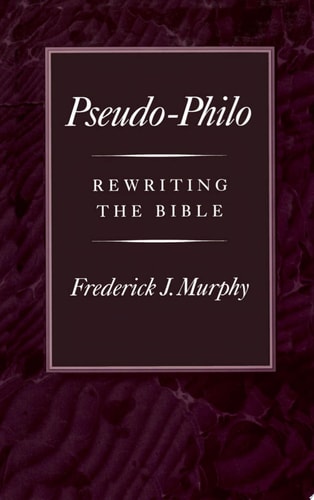
Pseudo-Philo: Rewriting the Bible
0
0
As an Amazon Associate and affiliate partner, Menrva Books earns from qualifying purchases. Learn more
Author Description
This is a literary and theological study of the Biblical Antiquities of Pseudo-Philo--a long, well-written reinterpretation of the Hebrew Bible written by a Palestinian Jew of the first century C.E. Using the methodologies of redaction and literary criticism, Murphy provides an analysis of the whole of the Biblical Antiquities. After a chapter-by-chapter analysis, Murphy addresses several topics more generally--major characters, major themes, and the historical context of the work. Full concordances to the Latin text are provided to assist future research on Pseudo-Philo. This book will prove an important resource for students of Jewish interpretation of the Bible at the end of the Second Temple period. It also sheds light on Jewish thought of the period regarding covenant, leadership in Israel, women in Israel, relations with Gentiles, divine providence, divine retribution, eschatology, and many other subjects. Furnishing a broad interpretive context for future work on the Biblical Antiquities, this study gives students of the Bible access to an important literary and religious product of first-century Judaism.
Menrva's Summary
THE THESIS
How does the first-century text known as the Biblical Antiquities reframe and interpret the Hebrew Bible for its contemporary audience? Frederick J. Murphy utilizes the methodologies of redaction and literary criticism to conduct a comprehensive examination of this ancient work. By analyzing the text chapter-by-chapter and synthesizing its broader thematic concerns, Murphy situates the document within the specific religious and historical landscape of the late Second Temple period. The study aims to provide both a scholarly analysis and a practical resource for understanding the evolution of Jewish thought during this era.
THE SCOPE MAP
What You Will Find
- A detailed chapter-by-chapter redaction and literary analysis of the Biblical Antiquities.
- Examination of key theological themes including covenant, divine providence, and eschatology.
- Analysis of social and political topics such as leadership in Israel, the role of women, and relations with Gentiles.
- Comprehensive concordances to the Latin text to facilitate further academic research.
THE AUTHORITY PERSPECTIVE
Scholars and students of Second Temple Judaism frequently identify this work as a foundational resource for navigating the complexities of Pseudo-Philo. The text is noted for its academic rigor and its utility in providing a structured interpretive framework for future research in the field.
Page Count:
336
Publication Date:
1993-11-11
Publisher:
Oxford University Press
ISBN-10:
0195076222
ISBN-13:
9780195076226
Religion
History
Bible_history
Judaism
Theology
Literary Criticism
Community Tags
Similar Books