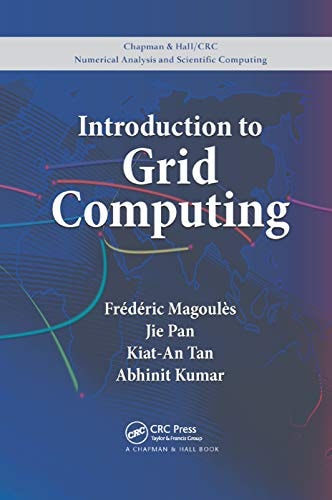
Introduction to Grid Computing
0
0
As an Amazon Associate and affiliate partner, Menrva Books earns from qualifying purchases. Learn more
Author Description
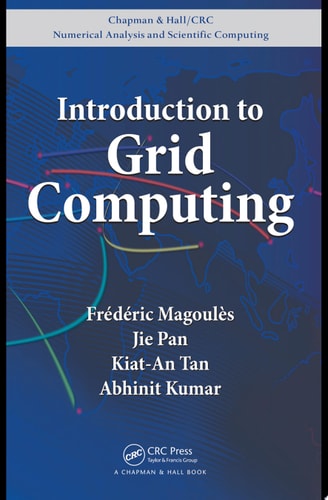
A Thorough Overview of the Next Generation in Computing Poised to follow in the footsteps of the Internet, grid computing is on the verge of becoming more robust and accessible to the public in the near future. Focusing on this novel, yet already powerful, technology, Introduction to Grid Computing explores state-of-the-art grid projects, core grid technologies, and applications of the grid. After comparing the grid with other distributed systems, the book covers two important aspects of a grid system: scheduling of jobs and resource discovery and monitoring in grid. It then discusses existing and emerging security technologies, such as WS-Security and OGSA security, as well as the functions of grid middleware at a conceptual level. The authors also describe famous grid projects, demonstrate the pricing of European options through the use of the Monte Carlo method on grids, and highlight different parallelization possibilities on the grid. Taking a tutorial approach, this concise book provides a complete introduction to the components of the grid architecture and applications of grid computing. It expertly shows how grid computing can be used in various areas, from computational mechanics to risk management in financial institutions.
Menrva's Summary
THE THESIS
Grid computing represents the next significant evolution in distributed systems, promising enhanced robustness and public accessibility. This book offers a comprehensive exploration of cutting-edge grid projects, fundamental grid technologies, and their diverse applications. It contrasts grid systems with other distributed architectures, then delves into critical aspects like job scheduling and resource discovery. The authors also examine current and emerging security technologies and the conceptual functions of grid middleware, providing a thorough introduction to grid architecture and its practical uses.
THE SCOPE MAP
- Comparison of grid computing with other distributed systems.
- Detailed coverage of job scheduling in grid environments.
- Explanation of resource discovery and monitoring within grids.
- Discussion of security technologies such as WS-Security and OGSA security.
- Conceptual overview of grid middleware functions.
- Examples of famous grid projects.
- Demonstration of Monte Carlo method for option pricing on grids.
- Exploration of parallelization possibilities on the grid.
THE AUTHORITY PERSPECTIVE
This book is presented as a tutorial introduction to grid computing, targeting readers seeking to understand its components and applications. The content suggests a focus on both theoretical underpinnings and practical demonstrations, such as financial modeling. The approach aims to provide a complete overview for those interested in areas ranging from computational mechanics to financial risk management.
Page Count:
334
Publication Date:
2019-10-23
Publisher:
Taylor & Francis Group
ISBN-10:
0367385821
ISBN-13:
9780367385828
Science
Non-Fiction
Computer Science
Technology
Distributed Systems