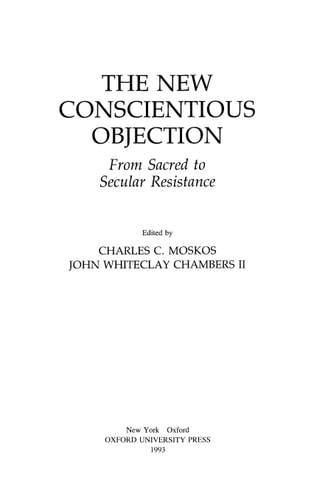
The New Conscientious Objection: From Sacred to Secular Resistance
0
0
As an Amazon Associate and affiliate partner, Menrva Books earns from qualifying purchases. Learn more
Author Description
Although conscientious objection is a long-standing phenomenon, it has only recently become a major factor affecting armed forces and society. The only comprehensive, comparative scholarly study of conscientious objection to military service, this book examines the history of the practice in the Western world and state policies that have grown up in response to it. It shows how the contemporary refusal to bear arms is likely to be secular and widespread rather than religious and marginal, now including service people (as seen in the 1991 War in the Persian Gulf) as well as conscription resisters. No account of civil-military relations or peace movements in advanced industrial countries is complete without reference to conscientious objection, and this book will be the standard text on the subject.
Menrva's Summary
THE THESIS
This book investigates the evolution of conscientious objection from a traditionally religious practice to a secular, widespread phenomenon that challenges modern civil-military relations. The authors, Charles C. Moskos and John Whiteclay Chambers II, utilize historical analysis and sociological data to examine how state policies have adapted to the refusal to bear arms. They argue that the shift from marginal religious dissent to mainstream secular resistance necessitates a new understanding of military service and individual rights in industrial societies.
THE SCOPE MAP
What You Will Find
- A comparative historical analysis of conscientious objection across Western nations.
- Examination of state policy responses to military service refusal.
- Analysis of the shift from religious-based objection to secular-based resistance.
- Case studies involving both conscription resisters and active-duty service personnel, including data from the 1991 Persian Gulf War.
THE AUTHORITY PERSPECTIVE
Experts identify this work as a foundational text for understanding the intersection of civil-military relations and individual conscience. Readers frequently note the academic rigor and the comprehensive nature of the research provided by the authors.
Page Count:
296
Publication Date:
1993-04-08
Publisher:
Oxford University Press
ISBN-10:
019507954X
ISBN-13:
9780195079548
History
Ethics
Military History
Sociology
Community Tags
Similar Books