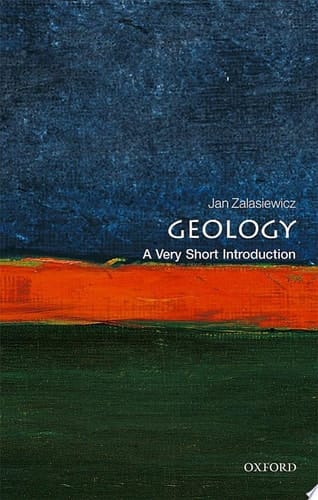
Author Description
The first modern treatment of purposes, methods, and principles of the geological investigation of earthquakes draws upon examples from many seismically active regions of the globe, including China, Japan, the Mediterranean countries, the U.S., and New Zealand. The Geology of Earthquakes will be useful to engineers, geophysicists, and planners, in addition to geologists, and will be an aid to the geotechnical community as well as to graduate and advanced undergraduate students. The first several chapters of the book include introductions to plate tectonics, structural geology, seismic waves, geodesy, Quaternary geochronological methods, and tectonic geomorphology. These serve as a common interdisciplinary background for the second half of the text, which divides the discussion of earthquakes according to tectonic environment: strike-slip, divergent, and convergent. Earthquake environments from the globe are amply illustrated with photographs, maps, and cross- sections. Case histories of recent, well-studied earthquakes demonstrate the interdisciplinary nature of earthquake science. Personal vignettes of early pioneers such as Charles Darwin, G.K. Gilbert, Bunjiro Koto, and Alexander McKay illustrate early historical milestones in earthquake geology. The final chapters of the book are devoted to secondary effects such as liquefaction, seismically induced landslides and tsunamis, and to the use of earthquake geology in earthquake hazard assessment. A glossary of terms, an extensive bibliography, and a comprehensive reference table of more than 300 historical earthquakes accompanied by surface faulting appear at the end of the text.
Menrva's Summary
THE THESIS
This text investigates the fundamental principles and methodologies of earthquake geology, bridging the gap between tectonic theory and practical hazard assessment. The authors, distinguished experts in the field, synthesize decades of research to provide a comprehensive framework for understanding seismic events. By integrating structural geology, geodesy, and geochronology, the book establishes a rigorous scientific basis for analyzing earthquake environments and their surface manifestations.
THE SCOPE MAP
What You Will Find
- Detailed analysis of tectonic environments including strike-slip, divergent, and convergent zones.
- Methodologies for Quaternary geochronology and tectonic geomorphology.
- Extensive case studies of global seismic events from regions such as Japan, New Zealand, and the United States.
- Practical applications for earthquake hazard assessment and geotechnical planning.
- Historical context provided through vignettes of pioneering geologists and seismologists.
THE AUTHORITY PERSPECTIVE
Experts recognize this work as a foundational text that successfully bridges the gap between academic theory and field application. Readers frequently note the technical density of the prose, making it a standard resource for graduate-level students and professional geophysicists.
Page Count:
576
Publication Date:
1997-01-02
Publisher:
Oxford University Press
ISBN-10:
0195078276
ISBN-13:
9780195078275
Science
Reference
Earthquakes
Geology
Seismology
Earth Science
Community Tags
Similar Books