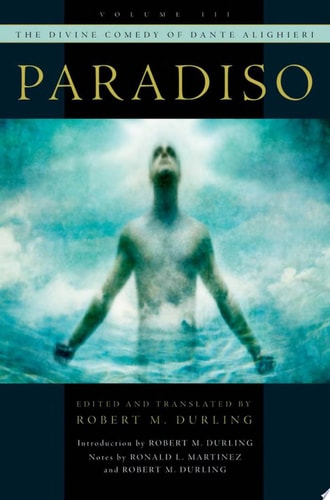
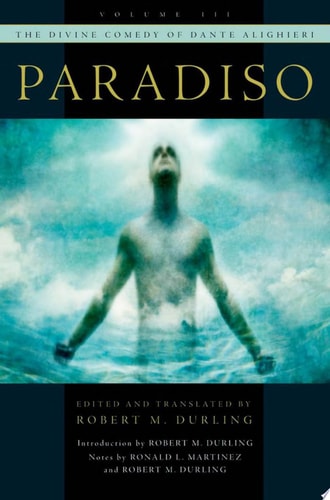
The Divine Comedy of Dante Alighieri: Paradiso
0
0
As an Amazon Associate and affiliate partner, Menrva Books earns from qualifying purchases. Learn more
Author Description
Robert Durling's spirited new prose translation of the Paradiso completes his masterful rendering of the Divine Comedy. Durling's earlier translations of the Inferno and the Purgatorio garnered high praise, and with this superb version of the Paradiso readers can now traverse the entirety of Dante's epic poem of spiritual ascent with the guidance of one of the greatest living Italian-to-English translators.Reunited with his beloved Beatrice in the Purgatorio, in the Paradiso the poet-narrator journeys with her through the heavenly spheres and comes to know "the state of blessed souls after death." As with the previous volumes, the original Italian and its English translation appear on facing pages. Readers will be drawn to Durling's precise and vivid prose, which captures Dante's extraordinary range of expression--from the high style of divine revelation to colloquial speech, lyrical interludes, and scornful diatribes against corrupt clergy.This edition boasts several unique features. Durling's introduction explores the chief interpretive issues surrounding the Paradiso, including the nature of its allegories, the status in the poem of Dante's human body, and his relation to the mystical tradition. The notes at the end of each canto provide detailed commentary on historical, theological, and literary allusions, and unravel the obscurity and difficulties of Dante's ambitious style. An unusual feature is the inclusion of the text, translation, and commentary on one of Dante's chief models, the famous cosmological poem by Boethius that ends the third book of his Consolation of Philosophy. A substantial section of Additional Notes discusses myths, symbols, and themes that figure in all three cantiche of Dante's masterpiece. Finally, the volume includes a set of indexes that is unique in American editions, including Proper Names Discussed in the Notes (with thorough subheadings concerning related themes), Passages Cited in the Notes, and Words Discussed in the Notes, as
Menrva's Summary
THE PULSE
The poet-narrator completes his spiritual ascent, traversing the celestial spheres to witness the state of blessed souls after death. Guided by his beloved Beatrice, the protagonist navigates the complex theological and cosmological architecture of Paradise. The narrative framework utilizes a first-person perspective, blending lyrical introspection with rigorous philosophical inquiry as the narrator moves toward the ultimate vision of the divine. The work functions as the final movement of a tripartite epic, requiring the reader to engage with the culmination of the narrator's moral and spiritual development.
INSIDE THE PAGES
- Prose translation presented on facing pages with the original Italian text
- Detailed canto-by-canto commentary addressing historical and theological allusions
- Inclusion of Boethius's cosmological poem as a foundational intertext
- Extensive scholarly introduction exploring allegorical interpretation and mystical traditions
- Comprehensive indexes covering proper names, cited passages, and thematic vocabulary
- Stylistic range spanning high-style revelation, lyrical passages, and polemical diatribes
- Analysis of the physical and metaphysical status of the narrator's body in the afterlife
- Supplemental notes discussing recurring myths and symbols across the entire trilogy
THE COLLECTIVE ECHO
Discussion often centers on the accessibility of Durling's prose translation compared to traditional verse renderings. Readers frequently highlight the utility of the extensive scholarly apparatus, which clarifies the dense theological and historical references inherent in the text. Critics note that the inclusion of Boethius provides a valuable context for understanding Dante's cosmological framework. The balance between the translation's readability and the depth of the critical notes makes this edition a frequent choice for both students and scholars. The work is widely regarded as a significant contribution to the study of medieval Italian literature.
Page Count:
888
Publication Date:
2011-01-05
Publisher:
Oxford University Press
ISBN-10:
0195087429
ISBN-13:
9780195087420
Classics
Poetry
Philosophy
Religion
Epic Poetry
Italian
Community Tags
Other Editions(2)
Similar Books
Reader Comments
Share Your Thoughts
No comments yet. Be the first to share your thoughts!