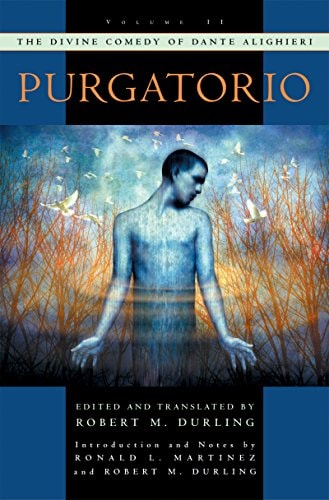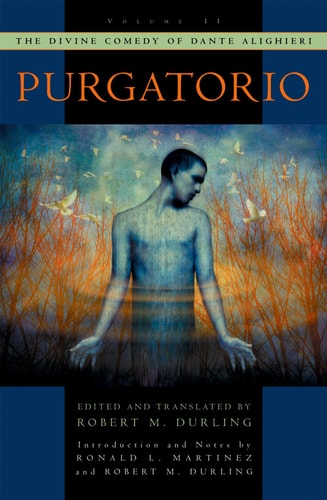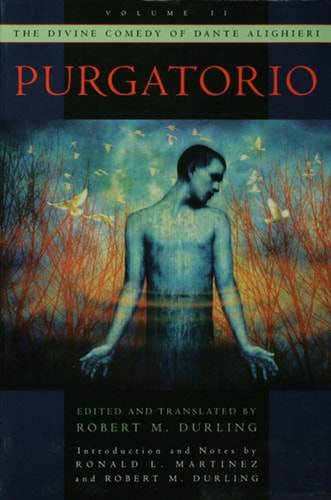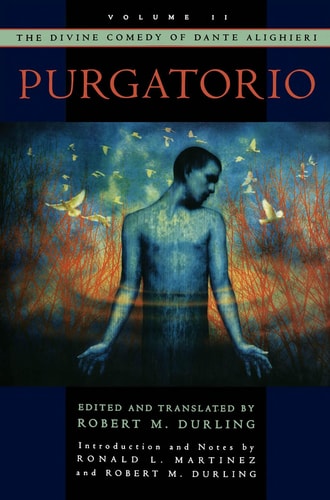
The Divine Comedy of Dante Alighieri: Vol. 2, Purgatorio
0
0
As an Amazon Associate and affiliate partner, Menrva Books earns from qualifying purchases. Learn more
Author Description
In the early 1300s, Dante Alighieri set out to write the three volumes which make the up The Divine Comedy. Purgatorio is the second volume in this set and opens with Dante the poet picturing Dante the pilgrim coming out of the pit of hell. Similar to the Inferno (34 cantos), this volume is divided into 33 cantos, written in tercets (groups of 3 lines). The English prose is arranged in tercets to facilitate easy correspondence to the verse form of the Italian on the facing page, enabling the reader to follow both languages line by line. In an effort to capture the peculiarities of Dante's original language, this translation strives toward the literal and sheds new light on the shape of the poem. Again the text of Purgatorio follows Petrocchi's La Commedia secondo l'antica vulgata, but the editor has departed from Petrocchi's readings in a number of cases, somewhat larger than in the previous Inferno, not without consideration of recent critical readings of the Comedy by scholars such as Lanza (1995, 1997) and Sanguineti (2001). As before, Petrocchi's punctuation has been lightened and American norms have been followed. However, without any pretensions to being "critical", the text presented here is electic and being not persuaded of the exclusive authority of any manuscript, the editor has felt free to adopt readings from various branches of the stemma. One major addition to this second volume is in the notes, where is found the Intercantica - a section for each canto that discusses its relation to the Inferno and which will make it easier for the reader to relate the different parts of the Comedy as a whole.
Menrva's Summary
THE PULSE
Emerging from the depths of the Inferno, the pilgrim Dante begins his arduous ascent up the mountain of Purgatory to seek spiritual purification. Dante, guided by the poet Virgil, navigates the seven terraces of the mountain, each corresponding to one of the seven deadly sins. The narrative framework utilizes a complex allegorical structure, blending theological inquiry with personal reflection as the protagonist encounters souls undergoing penance. The world is defined by a rigid, hierarchical moral geography where physical suffering serves as a mechanism for spiritual restoration.
INSIDE THE PAGES
- Structured into thirty-three distinct cantos.
- Utilizes the terza rima verse form, organized in tercets.
- Features a bilingual presentation with Italian and English on facing pages.
- Incorporates the Intercantica, a series of notes connecting this volume to the Inferno.
- Employs a literal translation approach to preserve the nuances of the original Italian.
- Explores the theological concepts of repentance, hope, and divine grace.
- Documents the interaction between the pilgrim and various historical and mythological figures.
- Adopts an eclectic textual approach based on multiple manuscript traditions.
THE COLLECTIVE ECHO
Readers and scholars frequently highlight the accessibility of this edition, noting that the facing-page format provides a clear bridge for those studying the original Italian text. Discussion often centers on the effectiveness of the Intercantica notes, which successfully illuminate the thematic continuity between the different parts of the Comedy. Critics appreciate the editor's commitment to a literal translation, which avoids over-interpretation and maintains the structural integrity of the poem. The pacing is described as deliberate and meditative, reflecting the slow, upward progress of the souls on the mountain. Many readers find this volume to be a balanced resource that serves both the casual student and the serious researcher of medieval literature.
Page Count:
704
Publication Date:
2003-04-17
Publisher:
Oxford University Press
ISBN-10:
0195087410
ISBN-13:
9780195087413
Poetry
Classics
Epic Poetry
Italian
Religious
Community Tags
Similar Books