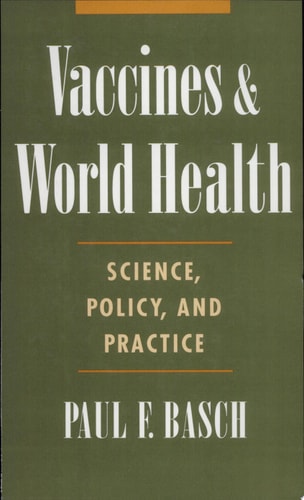
Vaccines and World Health: Science, Policy, and Practice
0
0
As an Amazon Associate and affiliate partner, Menrva Books earns from qualifying purchases. Learn more
Author Description
Since the advent of biotechnology in the mid-1970s, many people have been attracted to the prospect that its products might bring about rapid improvements in human health, especially in the poorest countries of the world. This timely work focuses on preventive and diagnostic technologies, particularly vaccines aimed at the infectious, vector-borne and parasitic diseases so widespread in the developing world. It explains the pathways that such products must take to achieve their goal of improving human health, identifies the various groups having a stake in this process, and discusses the concerns and risks facing each group. The book has been written for several groups of readers: 1) laboratory investigators, primarily in the industrialized world, who develop vaccines and other biotechnological tools, 2) the persons responsible for public health and disease control programs in the developing world, 3) the managers, investigators, epidemiologists and others who participate in the process of taking a product "from bench to bush" and 4) students of public health, medicine, economics, international relations and other disciplines that have an interest in technology transfer and international health.
Menrva's Summary
THE THESIS
This work investigates the complex intersection of biotechnology, public health policy, and the practical implementation of vaccine distribution in developing nations. Paul F. Basch, drawing on his extensive background in international health, examines the systemic challenges inherent in moving medical innovations from laboratory development to field application. The text provides a comprehensive framework for understanding the competing interests of researchers, policymakers, and local health authorities in the global effort to combat infectious and parasitic diseases.
THE SCOPE MAP
What You Will Find
- Analysis of the technological pathways from laboratory research to field deployment
- Identification of stakeholder risks and concerns in international health initiatives
- Examination of diagnostic and preventive technologies for vector-borne and parasitic diseases
- Discussion of the economic and political factors influencing technology transfer
THE AUTHORITY PERSPECTIVE
Experts recognize this text as a foundational resource for understanding the logistical and ethical hurdles of global health programs. Readers frequently note the clarity with which the author bridges the gap between high-level policy and the practical realities of disease control in resource-limited settings.
Page Count:
274
Publication Date:
1994-01-15
Publisher:
Oxford University Press
ISBN-10:
0195085329
ISBN-13:
9780195085327
Science
Vaccination
Public Health
Medicine
Vaccines
Biotechnology
Epidemiology
International relations
Community Tags
Similar Books