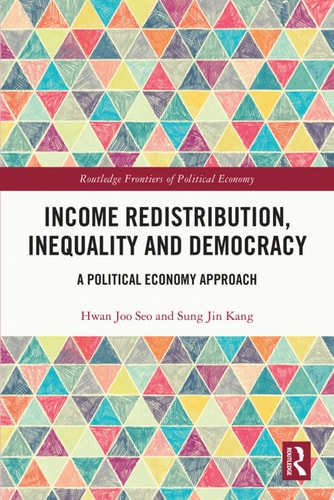
Income Redistribution, Inequality and Democracy: A Political Economy Approach
0
0
As an Amazon Associate and affiliate partner, Menrva Books earns from qualifying purchases. Learn more
Author Description
This book examines why democracy has failed to deliver effective solutions to income inequality problems over the last four decades, and if democracy can offer solutions to various increases in inequality in the future. It also addresses what elements are necessary for democracy to serve as an effective alternative for addressing inequality issues. Historical experiences over the past 40 years, including the global financial crisis, not only underscore the need for fresh perspectives on income inequality in economics but also question the ability of democracy to continue providing alternatives for addressing the escalating forms of inequality. Seo and Kang’s response to these inquiries diverge from conventional research in several significant ways. Primarily, what sets this research apart from existing studies is its intensified focus on income inequality as a product of the complex interplay between the political and economic domains, rather than a standalone examination of income inequality in isolation. Through a political economy perspective, this book argues that income inequality and income redistribution are shaped by the institutions, policies, and laws generated by the political system, with their formation and nature being determined by the power distribution among socio-political groups. A useful resource not only to researchers who study political phenomena in the field of economics, but also to scholars who study economic phenomena in the field of politics. Furthermore, it will be particularly intriguing for policy makers concerned with issues of inequality and income redistribution.
Menrva's Summary
THE THESIS
This book investigates the persistent failure of democratic systems to effectively address escalating income inequality over the past four decades and explores their potential to offer future solutions. It argues that income inequality and redistribution are not solely economic phenomena but are fundamentally shaped by the interplay of political and economic domains, influenced by institutions, policies, and the distribution of power among socio-political groups. The authors challenge conventional research by focusing on this complex interaction, drawing on historical experiences including the global financial crisis to question democracy's capacity to provide lasting alternatives to rising inequality. The work is intended for researchers in political economy, scholars of political science, and policymakers concerned with these critical issues.
THE SCOPE MAP
- Analysis of democratic systems' effectiveness in combating income inequality.
- Exploration of the political economy framework for understanding inequality.
- Examination of the role of institutions, policies, and laws in shaping redistribution.
- Discussion of power distribution among socio-political groups as a determinant of inequality.
- Consideration of historical experiences, including the global financial crisis.
- Assessment of democracy's future capacity to address escalating inequality.
THE AUTHORITY PERSPECTIVE
The book presents a political economy approach to understanding income inequality, arguing that its formation and nature are determined by the power distribution among socio-political groups and the institutions, policies, and laws generated by the political system. It questions the ability of democracy to continue providing alternatives for addressing escalating forms of inequality, especially in light of historical experiences like the global financial crisis. The work is positioned as a resource for researchers in economics and political science, as well as policymakers.
Page Count:
138
Publication Date:
2024-06-03
Publisher:
Taylor & Francis
ISBN-10:
1040034764
ISBN-13:
9781040034767
Non-Fiction
Economics
Politics
Democracy
Social Science
Community Tags
Similar Books