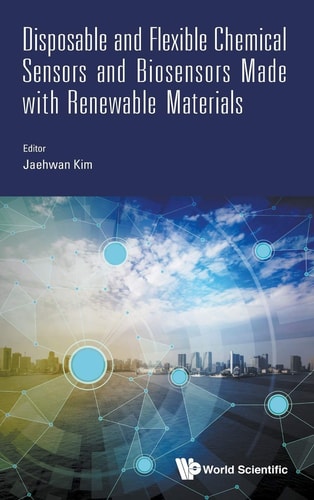
Disposable and Flexible Chemical Sensors and Biosensors Made with Renewable Materials
0
0
As an Amazon Associate and affiliate partner, Menrva Books earns from qualifying purchases. Learn more
Author Description
Sensors for measuring and detecting chemical and biological substances are comprehensively used and are, for the most part, unobtrusive. They can help monitor our health through alerting us to chemical or biological changes in our bodies, our environment through checking air quality or pollution levels and they can contribute towards a more sustainable future. Polymer-based sensors are the subject of much attention due to their ability to collect molecules on their flexible sensory surfaces. However, most petroleum-based polymers are not renewable, leading to problems of waste-disposal. By using renewable materials, such as paper, cotton or starch, these problems can be overcome. This book reviews the current state-of-play in renewable-material-based chemical sensors and biosensors, and suggests applications in industry, environment and biomedicine.
Menrva's Summary
THE THESIS
This book investigates the development and application of chemical sensors and biosensors constructed from renewable materials. The authors address the growing need for sustainable alternatives to petroleum-based polymers in sensor technology, exploring how materials like paper, cotton, and starch can be utilized to create flexible and disposable sensors. The work reviews the current advancements in this field and proposes potential applications across various sectors, including industry, environmental monitoring, and biomedicine, aiming to mitigate waste-disposal issues associated with traditional sensors.
THE SCOPE MAP
- Review of current state-of-play in renewable-material-based chemical sensors and biosensors.
- Discussion on the advantages of polymer-based sensors for molecular collection on flexible surfaces.
- Exploration of waste-disposal problems associated with petroleum-based polymers.
- Focus on the use of renewable materials such as paper, cotton, and starch.
- Suggested applications in industry, environment, and biomedicine.
- Comprehensive overview of sensor technology for measuring and detecting chemical and biological substances.
- Emphasis on unobtrusive and health-monitoring capabilities of sensors.
- Contribution towards a more sustainable future through advanced sensor materials.
THE AUTHORITY PERSPECTIVE
This technical review offers a comprehensive overview of the burgeoning field of renewable-material-based sensors. It is positioned as a valuable resource for researchers and industry professionals seeking to understand and implement sustainable sensor technologies. The book's focus on practical applications in industry, environment, and biomedicine suggests its utility for those working on cutting-edge solutions to waste-disposal challenges in sensor development.
Page Count:
159
Publication Date:
2017-09-01
Publisher:
World Scientific
ISBN-10:
178634386X
ISBN-13:
9781786343864
Non-Fiction
Science
Technology
Engineering
Biomedicine
Community Tags
Similar Books