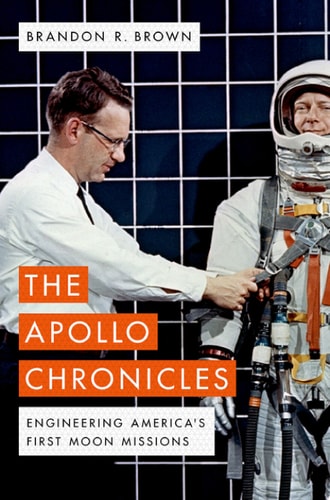
The Apollo Chronicles
0
0
As an Amazon Associate and affiliate partner, Menrva Books earns from qualifying purchases. Learn more
Author Description
The Moon Landing Of 1969 Stands As An Iconic Moment For Both The United States And Humankind. The Familiar Story Focuses On The Journey Of The Brave Astronauts, Who Brought Home Moon Rocks And Startling Photographs. But Apollo's Full Account Includes The Earthbound Engineers, Mounds Of Their Crumpled Paper, And Smoldering Metal Shards Of Exploded Engines. How Exactly Did The Nation, Step By Difficult Step, Take Men To The Moon And Back? In The Apollo Chronicles, Fifty Years After The Moon Landing, Author Brandon R. Brown, Himself The Son Of An Apollo Engineer, Revisits The Men And Women Who Toiled Behind The Lights. He Relays The Defining Twentieth-century Project From Its Roots, Bringing The Engineers' Work And Personalities To Bright Life On The Page. Set Against The Backdrop Of A Turbulent American Decade, The Narrative Whisks Audiences Through Tense Deadlines And Technical Miracles, From President John F. Kennedy's 1961 Challenge To Nasa's 1969 Lunar Triumph, As Engineers Confronted Wave After Wave Of Previously Unthinkable Challenges. Brown Immerses Readers In Key Physical Hurdles--from Building The World's Most Powerful Rockets To Keeping Humans Alive In The Hostile Void Of Space--using Language Free Of Acronyms And Technical Jargon. The Book Also Pulls Back From The Detailed Tasks And Asks Larger Questions. What Did We Learn About The Moon? And What Can This Uniquely Innovative Project Teach Us Today?
Menrva's Summary
THE THESIS
How did the United States successfully navigate the immense technical and logistical challenges required to land humans on the moon and return them safely to Earth? Brandon R. Brown, a physicist and son of an Apollo engineer, utilizes personal family history and historical records to document the labor of the thousands of individuals working behind the scenes. The book argues that the success of the Apollo program was as much a triumph of human persistence and collaborative engineering as it was a political milestone.
THE SCOPE MAP
What You Will Find
- A chronological account of the Apollo program from 1961 to 1969.
- Detailed narratives regarding the development of rocket propulsion and life-support systems.
- Biographical sketches of the engineers and support staff who operated behind the scenes.
Scope Limits
- The text does not provide a comprehensive technical manual or deep-dive into the physics of orbital mechanics.
- It does not focus on the political maneuvering within the Cold War beyond the immediate context of NASA's mission requirements.
THE AUTHORITY PERSPECTIVE
Readers frequently note the accessible prose style, which avoids excessive technical jargon to explain complex engineering feats. Experts highlight this work as a valuable human-centric supplement to more traditional, mission-focused histories of the space race.
Page Count:
288
Publication Date:
2019-01-01
Publisher:
Oxford University Press
ISBN-10:
0190681357
ISBN-13:
9780190681357
Science
History
Biography
Engineering
Technology
Community Tags
Similar Books