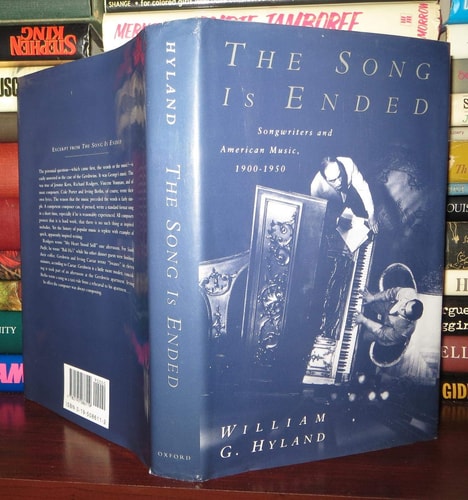
The Song is Ended: Songwriters and American Music, 1900-1950
0
0
As an Amazon Associate and affiliate partner, Menrva Books earns from qualifying purchases. Learn more
Author Description
"Embraceable You." "Someone to Watch Over Me." "Alexander's Ragtime Band." "My Funny Valentine." "White Christmas." Irving Berlin once wrote a song entitled "The Song is Ended, But the Melody Lingers On," and surely the title is a perfect epitaph for an incomparable era of American songwriting that endowed us with so many of our most beloved ballads and rousing showstoppers.The Song is Ended is the story of the Golden Age of American popular music, and a celebration of the enduring melodies and colorful life stories of five of this century's most engaging songwriters: Irving Berlin, Jerome Kern, George Gershwin, Cole Porter, and Richard Rodgers, with a fond bow in the direction of Victor Herbert and George M. Cohan. Author William G. Hyland provides an expert analysis of trends in popular songwriting during the first half of this century, escorting readers on a fascinating tour of the sights and sounds of fifty-odd years of American music, from the scratchy victrolas and Old World melodies of New York's teeming Lower East Side, to the hustle and bustle of Tin Pan Alley, to the hot rhythms and smoky clubs of the Jazz Age, to the sound stages of Hollywood and the glittering Broadway triumphs of "Showboat", "Anything Goes", "Porgy and Bess", "Pal Joey", and "Oklahoma!". Nostalgic lovers of good music will delight in the stories behind some of their favorite songs: Irving Berlin, for example, originally wrote his tender and romantic classic "I'll Be Loving You, Always," for a Marx Brothers revue (he wisely cut it), and he first composed "God Bless America" as an enlisted soldier in 1918, only to put it aside for almost twenty years when the pianist helping him rehearse for an army benefit complained "Geez, another patriotic song?"From Cole Porter's light-hearted and irrepressible "You're the Top" to Rodgers and Hart's wistful "Blue Moon" or the unforgettable "Summertime" from George Gershwin's masterful "Porgy and Bess," The Song is Ended captures the charm, freshness a
Menrva's Summary
THE THESIS
This book investigates the creative evolution and cultural impact of the Golden Age of American popular music between 1900 and 1950. William G. Hyland, a scholar of American cultural history, utilizes biographical profiles and musicological context to examine how a specific group of songwriters transformed the landscape of popular entertainment. The work argues that the synthesis of diverse immigrant influences and the rise of Tin Pan Alley created a unique musical vernacular that defined the American experience for half a century.
THE SCOPE MAP
What You Will Find
- Biographical analysis of Irving Berlin, Jerome Kern, George Gershwin, Cole Porter, and Richard Rodgers.
- Historical overview of the transition from early 20th-century vaudeville to the rise of Broadway and Hollywood musicals.
- Examination of the socio-economic conditions of Tin Pan Alley and the development of the American songbook.
- Anecdotal evidence regarding the composition and reception of iconic standards such as "God Bless America" and "Summertime."
THE AUTHORITY PERSPECTIVE
Experts recognize this work as a comprehensive survey of the primary figures who shaped the American musical canon during the early twentieth century. Readers frequently note the accessible narrative style that balances technical musical history with engaging biographical detail.
Page Count:
360
Publication Date:
1995-04-02
Publisher:
Oxford University Press
ISBN-10:
0195086112
ISBN-13:
9780195086119
History
Biography
Music
American History
Popular music
Community Tags
Similar Books