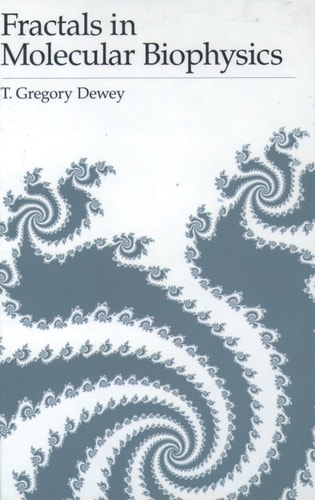
Fractals in Molecular Biophysics
0
0
As an Amazon Associate and affiliate partner, Menrva Books earns from qualifying purchases. Learn more
Author Description
Historically, science has sought to reduce complex problems to their simplest components, but more recently it has recognized the merit of studying complex phenomena in situ. Fractal geometry is one such appealing approach, and this book discusses its application to complex problems in molecular biophysics. The book provides a detailed, unified treatment of fractal aspects of protein and structure dynamics, fractal reaction kinetics in biochemical systems, sequence correlations in DNA and proteins, and descriptors of chaos in enzymatic systems. In an area that has been slow to acknowledge the use of fractals, this is an important addition to the literature, offering a glimpse of the wealth of possible applications to complex problems.
Menrva's Summary
THE THESIS
Can fractal geometry provide a more effective framework for understanding the inherent complexity of molecular biophysics than traditional reductionist methods? T. Gregory Dewey addresses the limitations of classical scientific reductionism by applying fractal geometry to the study of complex biological systems. The text synthesizes research on protein dynamics, biochemical reaction kinetics, and DNA sequence analysis to demonstrate how non-linear, fractal-based models offer superior descriptive power for chaotic enzymatic processes.
THE SCOPE MAP
What You Will Find
- Analysis of fractal aspects regarding protein structure and molecular dynamics.
- Mathematical frameworks for modeling fractal reaction kinetics in biochemical environments.
- Examination of sequence correlations found within DNA and protein structures.
- Methodologies for utilizing chaos theory to describe enzymatic system behavior.
THE AUTHORITY PERSPECTIVE
Experts recognize this work as a specialized contribution to the intersection of mathematics and biophysics, particularly for its attempt to formalize fractal applications in a field traditionally dominated by linear models. Readers frequently note the technical density of the prose, which assumes a strong background in physical chemistry and advanced mathematics.
Page Count:
288
Publication Date:
1998-02-19
Publisher:
Oxford University Press
ISBN-10:
0195084470
ISBN-13:
9780195084474
Science
Chemistry
Mathematics
Fractals
Biophysics
Community Tags
Other Editions(2)

Similar Books