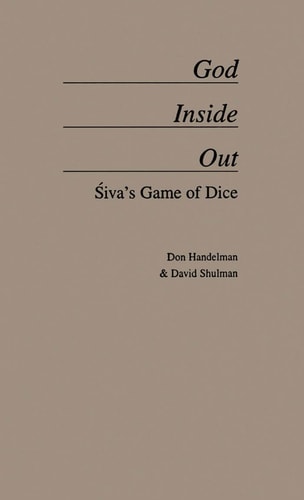
God Inside Out: Siva's Game of Dice
0
0
As an Amazon Associate and affiliate partner, Menrva Books earns from qualifying purchases. Learn more
Author Description
This book offers a new exploration of the mythology of the Hindu god Siva, who spends his time playing dice with his wife, to whom he habitually loses. The result of the game is our world, which turns the god inside-out and changes his internal composition. Hindus maintain that Siva is perpetually absorbed in this game, which is recreated in innumerable stories, poems, paintings, and sculptural carvings. This notion of the god at play, arguee Handelman and Shulman, is one of the most central and expressive veins in the metaphysics elaborated through the centuries, in many idioms and modes, around the god.The book comprises three interlocking essays; the first presents the dice-game proper, in the light of the texts and visual depictions the authors have collected. The second and third chapters take up two mythic "sequels" to the game. Based on their analysis of these sequels, the authors argue that notions of "asceticism" so frequently associated with Siva, with Yoga, and with Hindu religion are, in fact, foreign to Hinduism's inherent logic as reflected in Siva's game of dice. They suggest an alternative reading of this set of practices and ideas, providing startling new insights into Hindu mythology and the major poetic texts from the classical Sanskrit tradition.
Menrva's Summary
THE THESIS
This book investigates the metaphysical significance of the dice game between the Hindu god Siva and his consort as a foundational logic for understanding the nature of the world and divine play. Authors David Shulman and Don Handelman utilize their extensive expertise in South Asian studies and anthropology to challenge conventional interpretations of Siva. By analyzing a wide array of classical Sanskrit texts, visual art, and sculptural evidence, they argue that the god's perpetual game of dice—and his habitual loss—serves as the primary mechanism for the creation and transformation of reality, effectively turning the deity inside out.
THE SCOPE MAP
What You Will Find
- A detailed examination of the dice-game mythos as depicted in classical Sanskrit poetry and visual art.
- An analysis of two primary mythic sequels that expand upon the implications of the initial game.
- A critical re-evaluation of the role of asceticism and Yoga within the internal logic of Hindu religious practice.
- A methodological framework that prioritizes the concept of divine play over traditional ascetic interpretations.
THE AUTHORITY PERSPECTIVE
Scholars and students of Hindu mythology frequently cite this work for its sophisticated re-reading of classical texts and its challenge to established academic paradigms regarding asceticism. The prose is noted for its high level of intellectual rigor, making it a significant resource for those engaged in advanced studies of South Asian religious philosophy.
Page Count:
232
Publication Date:
1997-06-19
Publisher:
Oxford University Press
ISBN-10:
0195108442
ISBN-13:
9780195108446
Philosophy
Religion
Mythology
Hinduism
Sanskrit
Dice
Community Tags
Similar Books