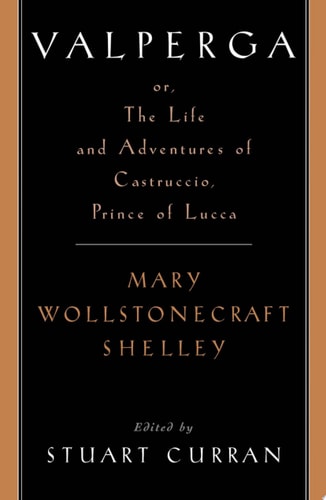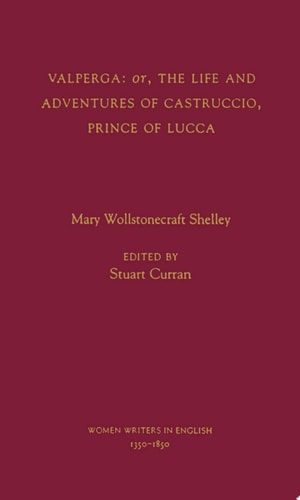
Valperga: Or the Life and Adventures of Castruccio, Prince of Lucca
0
0
As an Amazon Associate and affiliate partner, Menrva Books earns from qualifying purchases. Learn more
Author Description
Not reprinted since its first edition, Mary Shelley's second novel is sure to be a major discovery of the Mary Shelley bicentenary of 1997. The novel's lack of success as a follow-up to Frankenstein was the result of its subject matter and unconventional approach to the genre of historical fiction, attributes that can only delight the twentieth-century reader. Shelley's mastery of the intricate details of thirteenth-century Tuscan politics is unique among women of her time, and her resolute filtering of the bloody heroics of the age through the sensibilities of two women who are destroyed by them reveals the feminist perspective missing so conspicuously from her first novel. The latest addition to the acclaimed Women Writers in English series, this glittering novel from Romanticism's premier woman storyteller belongs on the shelves of all serious readers of English fiction.
Menrva's Summary
THE PULSE
The narrative centers on the rise and fall of the 14th-century warlord Castruccio Castracani and his complex, destructive relationship with the visionary Euthanasia dei Adimari. Shelley tracks the political ascent of Castruccio as he maneuvers through the volatile landscape of medieval Tuscany, driven by ambition and the pursuit of power. Opposing his cold pragmatism is Euthanasia, a woman whose commitment to peace and personal integrity places her in direct conflict with the encroaching violence of the era. The novel employs a third-person perspective to examine the tension between individual agency and the crushing weight of historical inevitability. The world is defined by the rigid social hierarchies and shifting alliances of the Italian city-states, where personal loyalties are frequently sacrificed for territorial gain.
INSIDE THE PAGES
- Detailed exploration of 14th-century Tuscan political intrigue
- Contrast between masculine martial ambition and feminine moral philosophy
- Examination of the cost of power on personal relationships
- Use of historical figures to critique contemporary societal structures
- Focus on the psychological development of the protagonist
- Atmospheric depiction of medieval Italian landscapes and city life
- Integration of feminist themes within a traditional historical framework
- Exploration of the conflict between duty and individual desire
THE COLLECTIVE ECHO
Discussion often centers on how Shelley subverts the traditional historical novel by prioritizing the perspectives of women over the conventional glorification of male military leaders. Readers frequently highlight the intellectual depth of the dialogue and the meticulous research that informs the depiction of medieval Italian politics. Critics often note that the novel serves as a significant counterpoint to the gothic tropes found in her earlier work, showcasing a more grounded and analytical approach to storytelling. The narrative is often praised for its refusal to provide easy resolutions, instead forcing the reader to confront the tragic consequences of unchecked ambition and the fragility of peace in a war-torn society.
Page Count:
480
Publication Date:
1998-01-08
Publisher:
Oxford University Press
ISBN-10:
0195108817
ISBN-13:
9780195108811
Historical Fiction
Political fiction
Classic Literature
Feminist fiction
Romanticism